yahoo Press
Bessent warns Iran’s global partners to cut ties or face ‘Operation Economic Outcast’
Images
1 / 7
2 / 7

3 / 7

4 / 7

5 / 7

6 / 7

7 / 7
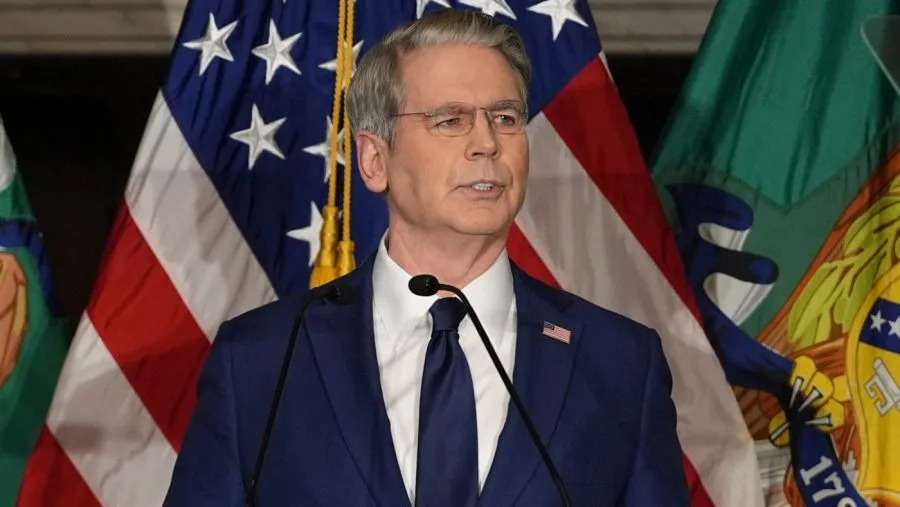
Treasury Secretary Scott Bessent on Monday issued a global warning for countries to cut any financial ties with Iran or risk being cut off from the U.S. dollar system, launching a new economic pressure campaign against the Islamic Republic as the military front has reached a stalemate six months into the war.

Called "Operation Economic Outcast," the campaign is marketed as a financial "D-Day" akin to the American invasion of Normandy in World War II. But Bessent's highly anticipated remarks offered few specific, public actions and instead appeared to serve as a stern advisory.

"Well, we are giving everyone the opportunity to remedy bad behavior, why would I want to blow up the global financial system?" Bessent responded to a question on the lack of specifics or immediate action.

He said President Trump is making calls to world leaders and that officials from the Defense, Treasury and State departments are calling counterparts demanding action in severing ties with Tehran.

Bessent held back naming and shaming specific governments or publicizing timelines for action but said they are being communicated behind the scenes.

"We're not going to name names. We've already seen some results, and I am confident the president, as you all know, is quite persuasive," Bessent said at a press conference announcing the sanctions plan.

"I would expect that very quickly, if they do not respond, then you will see the ramifications of their actions."

Absent from Bessent's remarks was whether the administration will take specific action against China, Iran's largest trading partner and primary destination for its oil exports — although these have declined sharply over the course of the war. Trump is scheduled to welcome Chinese President Xi Jinping for a state visit on Sept. 24, where the two want to advance a trade deal.

Bessent said no country "is above the reach of U.S. sanctions," when asked if the administration was pulling punches on Beijing.

"We find that the best way to engage with countries is through quiet diplomacy, and we are level-setting with every country to tell them our expectations," he said.

The administration has earlier sanctioned Chinese entities processing Iranian oil.

Alongside the announcement, the Treasury Department outlined that it was expanding its authority to sanction any person, regardless of location, for operating in specific sectors of the Iranian economy. These include digital assets, technology, gold, aviation and shipping. It further announced new sanctions against 60 entities, individuals and vessels related to Iran's nuclear and missile technology programs, its ability to conduct cyber operations and generate oil revenue.

"Treasury has mapped every node, every facilitator, and every network that Iran has used to smuggle oil and evade sanctions," Bessent said.

He called for international branches of Iran's Bank Melli closed and further teased that a major announcement of sanctions against a financial institution would take place by the end of the week.

The secretary projected the choice before Iran as "complete global isolation and a subsistence economy, or a path back to normalcy with an opportunity to rejoin the global economy."

Trump has said his aim of going to war with Iran at the end of February was to prevent the country from ever building a nuclear weapon. But Iran has withstood six months of U.S. military attacks — initially in coordination with Israel — demonstrated its ability to hold the Strait of Hormuz hostage and walked away from diplomatic talks with the U.S. over its nuclear program.

The U.S. has responded by imposing a naval blockade against Iran in the strait, which has severely diminished the amount of Iranian oil exported by sea.

Iran's currency, the rial, reached a record low Monday, declining to approximately 2.02 million to the U.S. dollar. Trump, in a post on his social media site Truth Social, said Iran is "in Economic and Military Death Spiral." In a separate post he said "IRAN IS COMPLETELY COLLAPSING!!!"

But Iran's ability to militarily threaten ships in the Strait of Hormuz has created an effective chokehold on the key maritime waterway, raising energy prices globally and stifling Persian Gulf energy exports. A U.S. campaign to escort ships out of the strait has failed to restore transit to prewar levels.

Gas prices in the U.S. again reached over $4 per gallon in the last month, according to AAA.

Iran's Parliament speaker who earlier negotiated with the U.S., Mohammad Bagher Qalibaf, pushed back on the U.S. economic pressure campaign in a statement posted to the social platform X.

"Americans know that no one buys their bombast; the United States is not in an economic position to further restrict its relations with other countries," he wrote.

"Iran's trading partners, both in the media and through messages sent to us, have made it clear that they don't take these statements into account anywhere."

Still, while the United Arab Emirates attempted a rapprochement with Iran, Abu Dhabi announced last week it was cutting trade ties with Tehran after coming under renewed military attacks.

Updated at 2:58 p.m. EDT

Copyright 2026 Nexstar Media, Inc. All rights reserved. This material may not be published, broadcast, rewritten, or redistributed.For the latest news, weather, sports, and streaming video, head to The Hill.