yahoo Press
Supreme Court rules blue states sued too early over Trump’s mail voting order
Images
1 / 7
2 / 7

3 / 7

4 / 7
5 / 7

6 / 7

7 / 7
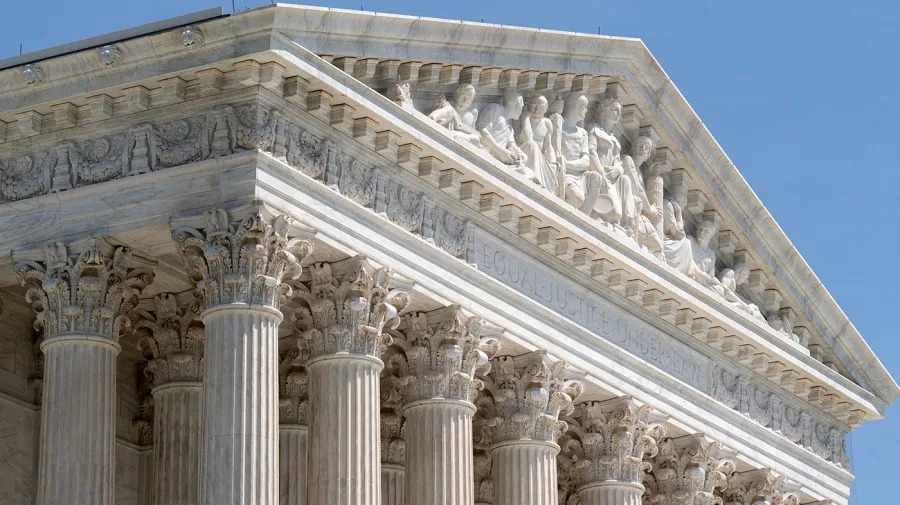
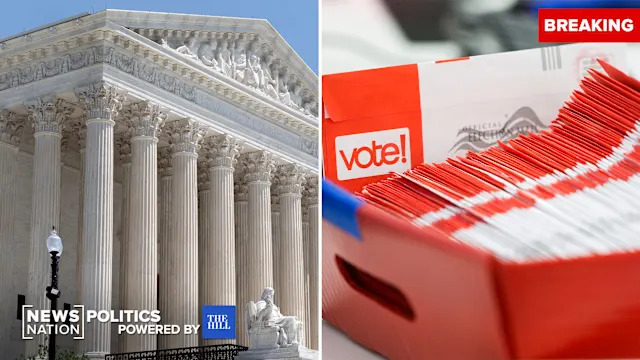
The Supreme Court lifted a judge's block on President Trump's executive order adding to mail voting requirements, removing a key roadblock that prevented the policy from going into effect for the midterms.

Over the public dissents of the three liberal justices, the high court said Monday that the judge had no authority to block Trump's directive, at least ahead of the U.S. Postal Service implementing the new ballot standards.

"Federal courts review final rules, not proposed rules—and certainly not antecedent internal directives to propose a rule. If the Postal Service's final rule harms the States, they may challenge that rule," the court wrote.

It allows Trump to move closer to implementing his mail ballot restrictions for November's contests. But now that the Postal Service announced its final regulation late last week, the states had already begun their new push to block it.

In dissent, the court's liberal justices said they would've kept the block in place.

"Today's decision does not address whether the President's attempts to interfere with States' administration of the November 2026 elections are lawful," wrote Justice Sonia Sotomayor, joined by Justice Elena Kagan. "Nor does it suggest that the Executive Branch has any constitutional or statutory authority to implement the President's directives.

"Instead, today's decision merely postpones adjudication of those challenges."

Justice Ketanji Brown Jackson, the court's junior liberal justice, said her colleagues had a "lack of situational awareness" and were injecting chaos into the election cycle. "Rather than swallow the Government's gamesmanship whole, the Court should have given this empty, strategic, and bad-faith stay bid the swift rejection it deserves," Jackson wrote in her separate dissent.

California, Massachusetts, Nevada and Washington co-led the suit, which involves 23 states and the District of Columbia in total.

In March, Trump signed an executive order directing his administration to create a list of verified citizens who are eligible to vote and ordered the Postal Service to implement new standards for mail ballots.

It's part of Trump's years-long targeting of mail ballots over his claims they drive mass election fraud. States have found some instances of fraud and noncitizens voting, but not nearly at the massive scale Trump has purported.

The Trump administration turned to the Supreme Court after U.S. District Judge Indira Talwani blocked Trump's order in a group of the Democratic-controlled states that are suing. Talwani is an appointee of former President Obama.

Solicitor General D. John Sauer said the judge got involved too early. The Postal Service hadn't yet implemented Trump's policy and only announced the final regulation last week.

"The issuance of a final rule underscores the need for relief from the district court's improper, unripe injunction," Sauer wrote to the Supreme Court.

The case now returns to the lower courts, where Talwani has already set a speedy schedule to consider the legality of the Postal Service's new announcement. The judge is an appointee of former President Obama.

She had also blocked Trump's executive order in response to a separate lawsuit brought by private groups. But unlike the states' case, that block applied nationwide.

"A majority of the U.S. Supreme Court does not seem to recognize the grave threat the president's actions pose for our democracy. There is nothing hypothetical about his intent to illegally suppress legitimate votes," Washington Attorney General Nick Brown (D) said in a statement.

"Fortunately, today's decision does not bless the substance of the president's actions, it simply says states must wait slightly longer to challenge them," he continued. "We stand ready to take action to protect the integrity of our elections and prevent this clearly unconstitutional overreach from taking effect. States control elections, not the president."

The ruling marks the president's latest win on the Supreme Court's emergency docket, where the justices intervene immediately on time-sensitive matters, usually on a compressed timeline without oral arguments.

The Democratic-controlled states told the Supreme Court it "would not be sensible" to force them to wait to sue. They say the policies will ultimately be unlawful and they won't have enough time to convince the courts to block it before November's contests.

"Because of the high risk of errors and the limited window for correcting mistakes, many of the millions of voters who rely on mail voting—especially voters with disabilities and those in rural areas—would likely be denied mail ballots and, as a result, disenfranchised. Many more voters would be confused," the states wrote.

Updated at 7:56 p.m. EDT

Copyright 2026 Nexstar Media, Inc. All rights reserved. This material may not be published, broadcast, rewritten, or redistributed.For the latest news, weather, sports, and streaming video, head to The Hill.