Press
Fast-moving wildfire forces thousands to evacuate near Reno, Nevada
Images
1 / 20
2 / 20
3 / 20
4 / 20
5 / 20
6 / 20

7 / 20

8 / 20

9 / 20
10 / 20

11 / 20

12 / 20

13 / 20
14 / 20

15 / 20

16 / 20

17 / 20

18 / 20

19 / 20

20 / 20
This video can not be played

Plumes of smoke seen over Reno as thousands evacuate due to wildfires

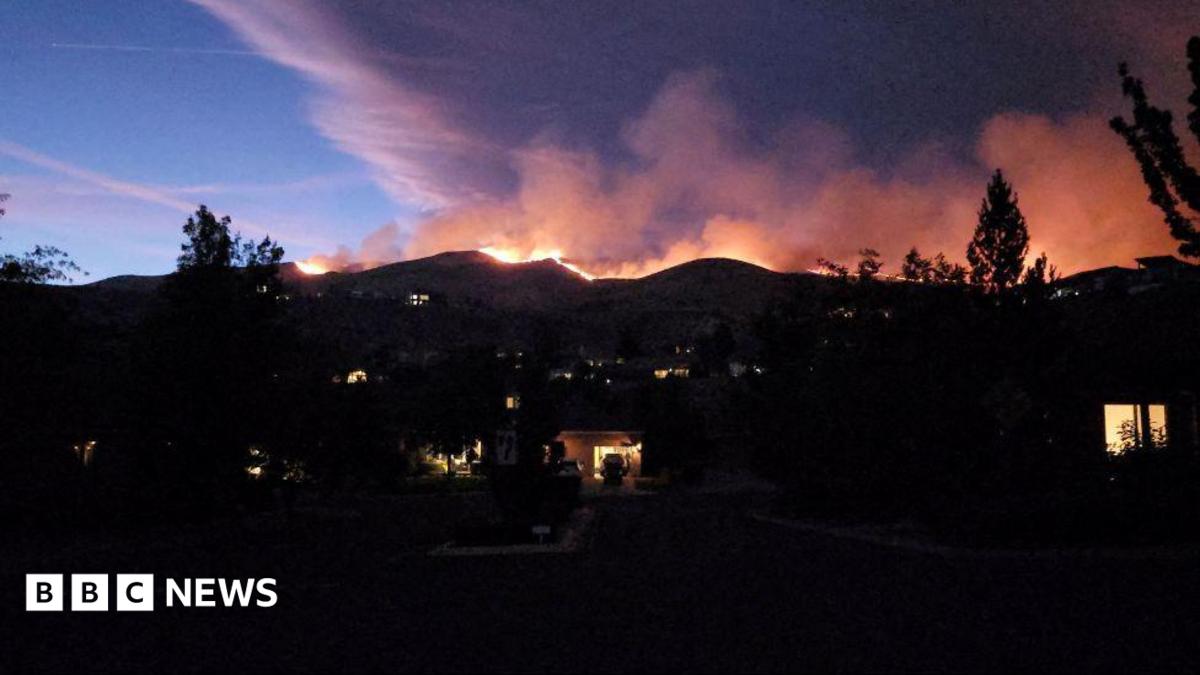
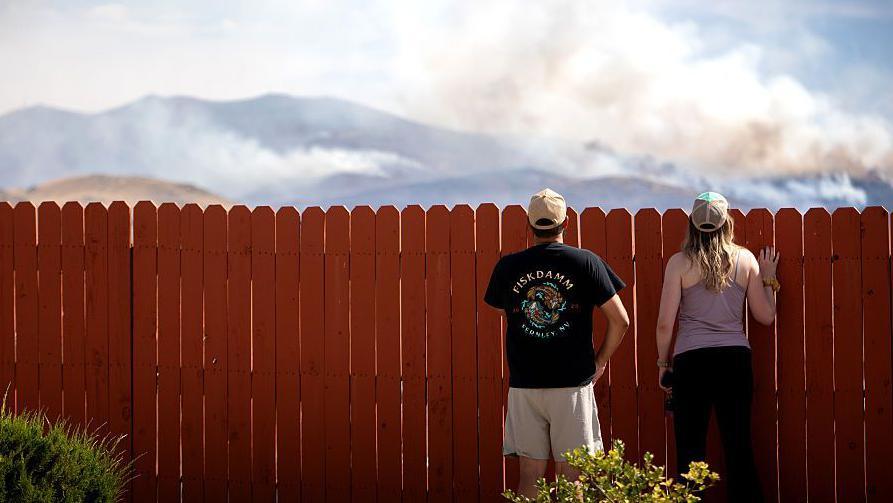
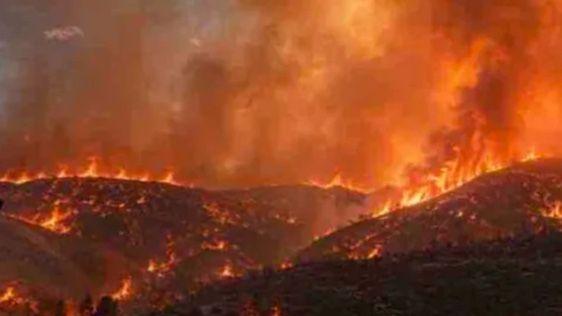
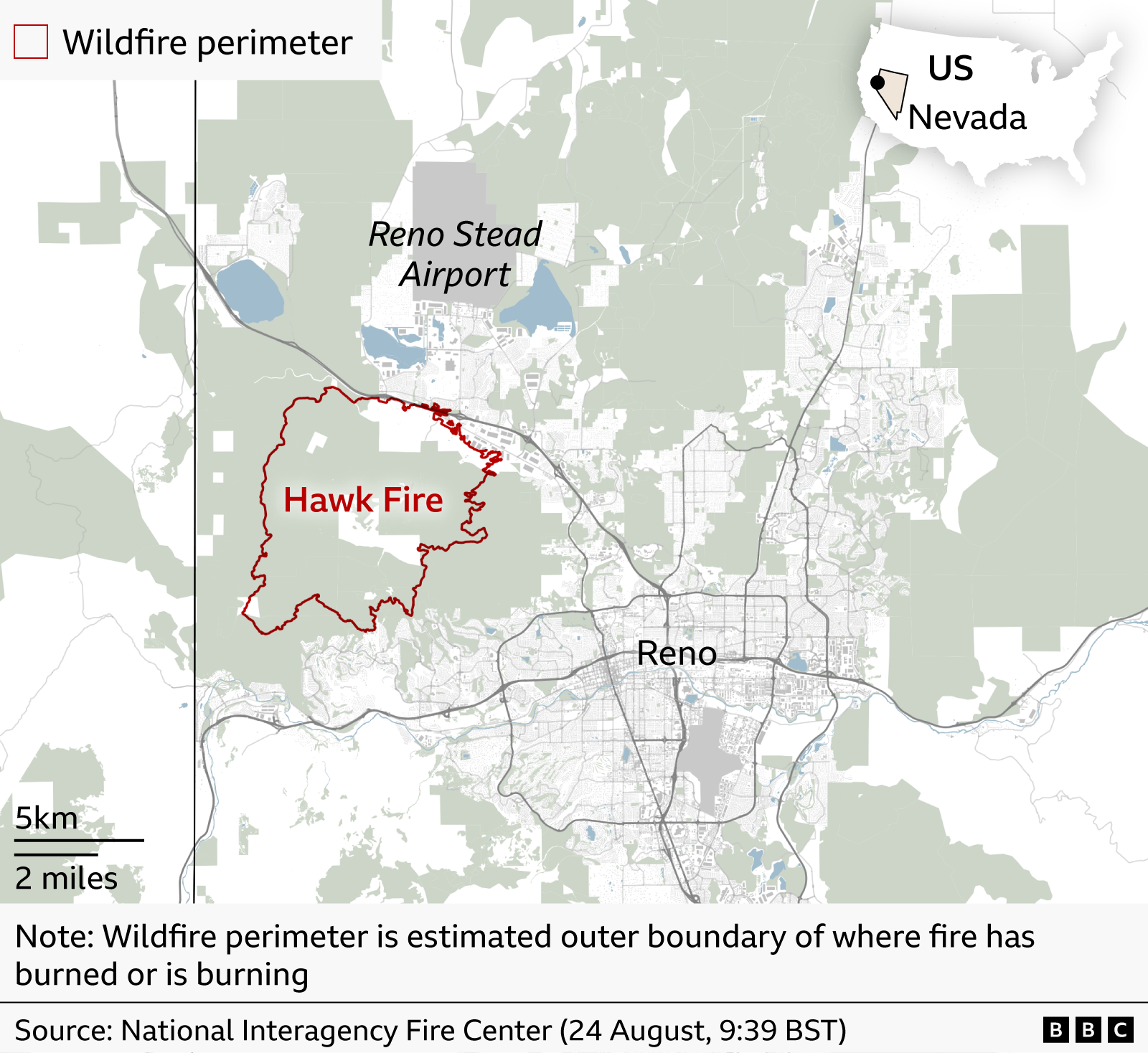
Fire crews are still working to contain a large wildfire that has forced tens of thousands of people to evacuate near Reno, Nevada on Monday.

The fire, which continues to burn on the outskirts of the city, has claimed over 15,000 acres (61 sq km) of land, injured seven people, and destroyed 32 homes.

By Monday afternoon (local time), officials said they had made progress and controlled 27% of the blaze, but evacuation orders are still in place for 23,000 residents. About 40,000 more have been told to be ready to leave at any moment.

Officials warned that the fire is expected to burn for two more days - and said there was no timeline for people to return to their homes.

The fire, which was first reported on Saturday morning, has spread in the foothills of the Sierra Nevada mountains near Reno due to windy and unpredictable weather conditions.

The immediate "go now" evacuation zone and wider "get set" area - where people are being warned to prepare to evacuate - do not extend to the centre of Reno, but do affect large urban areas and part of a highway.

Chief Richard Edwards of the Truckee Meadows Fire Protection District, said the seven injured include four civilians and three firefighters, who suffered minor burns.

He added that 32 homes have been destroyed and six damaged, with those numbers expected to increase. Shelters have been set up in the area to take in displaced residents.

While firefighters have made progress, more than two-thirds of the fire's perimeter remains uncontained. Conditions can change quickly, with wind in particular still posing a risk, officials said.

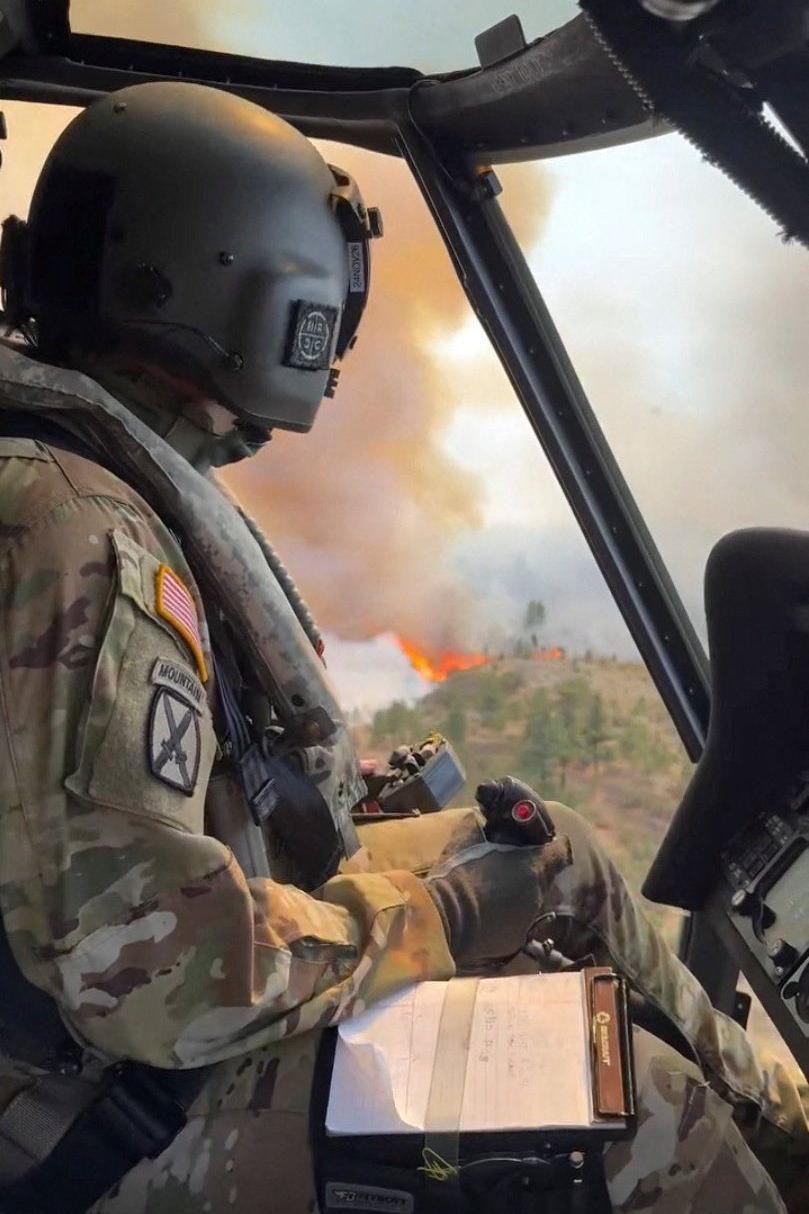
Nevada's Governor Joe Lombardo declared a state of emergency in Washoe County and ordered the National Guard to join firefighting and law enforcement efforts.

"This is an active and rapidly evolving situation and I urge everyone in the affected areas to remain vigilant and follow the direction of local officials," he said.

Firefighters from Australia and New Zealand also took part in the containment effort – as well as crews from 15 US states.

According to local officials, the fire was caused by humans and first reported at 11:15 local time (18:15 GMT) on Saturday. Edwards confirmed on Monday that investigators do not yet know if the blaze was set intentionally.

The Nevada National Guard said 72 personnel, one Chinook and one Black Hawk helicopter had joined the response

The University of Nevada in Reno - which has its main campus in the city close to the "get set" warning area - said regular campus operations would continue but that it was monitoring the situation.

Large air tankers and helicopters have been flying over the affected area dropping water and fire retardants.

Justin Davis, 29, lives on Peavine Mountain, close to Reno, and watched as the fire spread towards his home on Saturday and destroyed four of his vehicles.

He told the BBC he had previously bought a water truck in case a wildfire like this occurred and had used it to save his home.

"We turned on the water truck and just started spraying down the things we wanted to save," he said.

Justin Davis, who lives close to Reno, said neighbour's properties were "completely levelled" by the fire

The blaze has been been named the Hawk Fire because it was first reported near the Hawk Meadow Trail, to the west of Reno.

Reno, in western Nevada, is located close to the state boundary with California and has a population of around 280,000 people.

Wildfires are common in south-western US states, including Nevada, and are becoming more severe, according to the National Oceanic and Atmospheric Administration. There are currently three large fires in the state, out of a total of 79 nationwide.

However, many of these fires develop in rural and less populated areas, with only a few encroaching on population centres.

Scientists say that human-induced climate change makes the warm, dry conditions that facilitate the rapid spread of wildfires more likely.

Are you in the area? If it is safe to do so, share your story.

Are you affected by the wildfires? If it is safe to do so, share your story.