yahoo Press
47 Americans missing after flash floods in Nepal and China
Images
1 / 20
2 / 20

3 / 20

4 / 20
5 / 20
6 / 20
7 / 20
8 / 20
9 / 20
10 / 20
11 / 20
12 / 20
13 / 20
14 / 20
15 / 20
16 / 20
17 / 20
18 / 20
19 / 20

20 / 20
(NewsNation) — Almost 50 Americans are missing following flash floods in Nepal and China.

According to officials, 403 people were reported missing after flash floods in a border area of Nepal and China on Wednesday, killing at least 160 people and leaving hundreds of tourists, workers and others missing.

The State Department said it was aware of Americans affected.

China state broadcaster CCTV reported at least three dead and 265 missing in the Tibet region's Gyirong County near the border.

 Podcaster sheds light on case of JoAnn Benner, missing since 1976

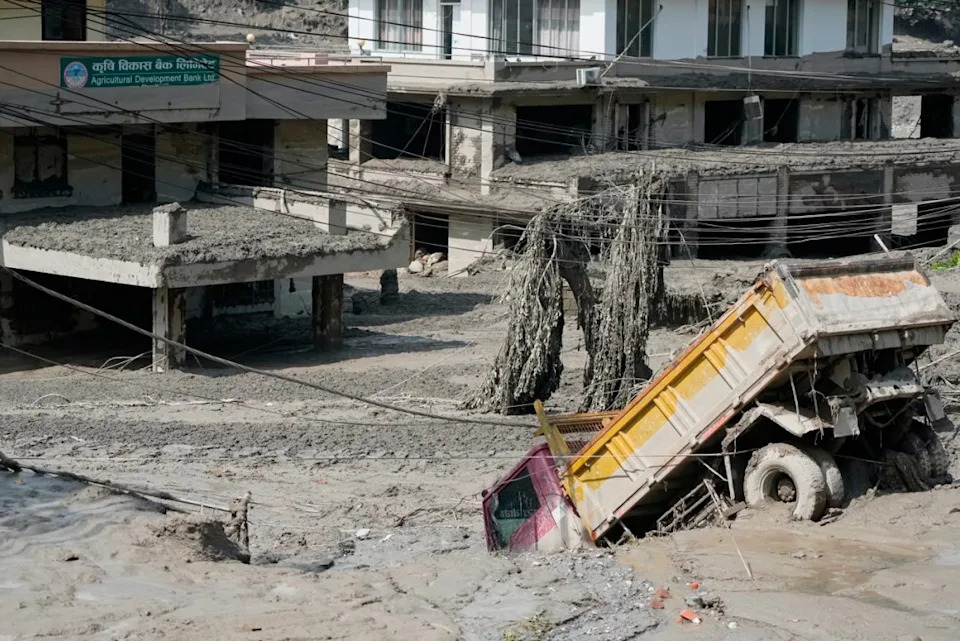
A flood-damaged section of a highway in Nuwakot, Central Nepal, following the outburst of a glacial lake in Tibet on August 26, 2026. (Photo by Subaas Shrestha/NurPhoto via Getty Images)

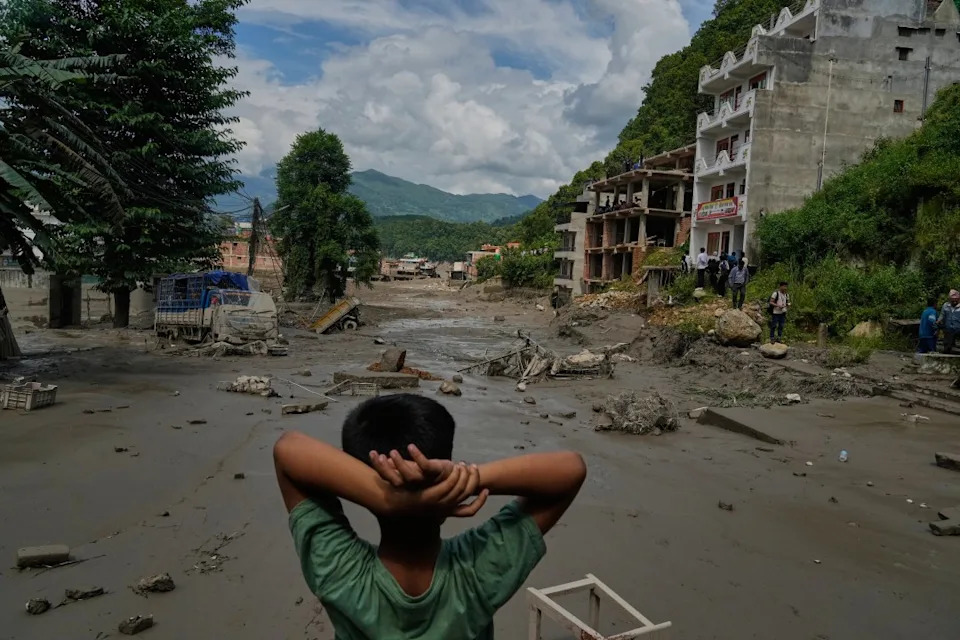
A boy looks at the devastation caused by flash flooding along the Trishuli River in Nepal's Nuwakot district, Wednesday, Aug. 26, 2026. (AP Photo/Niranjan Shrestha)

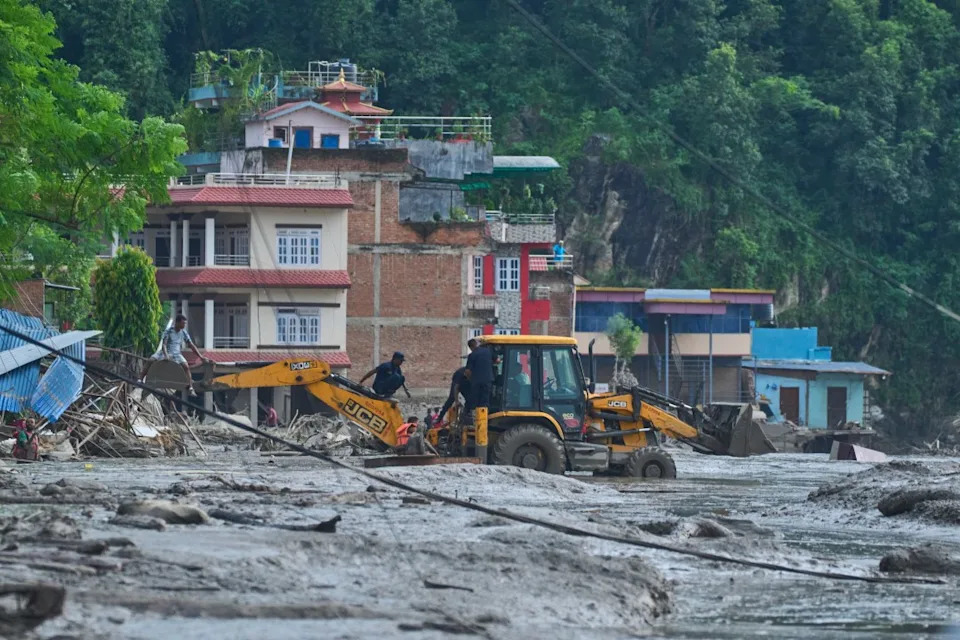
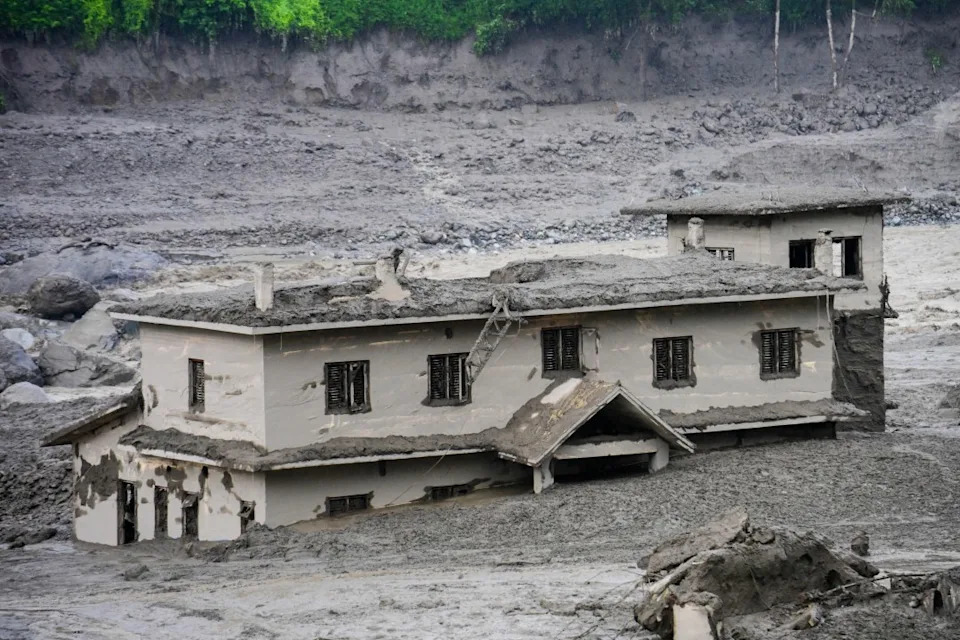
Rescuers use earthmovers to reach submerged houses after flash flooding along the Trishuli River in Nepal's Nuwakot district, Wednesday, Aug. 26, 2026. (AP Photo/Niranjan Shrestha)

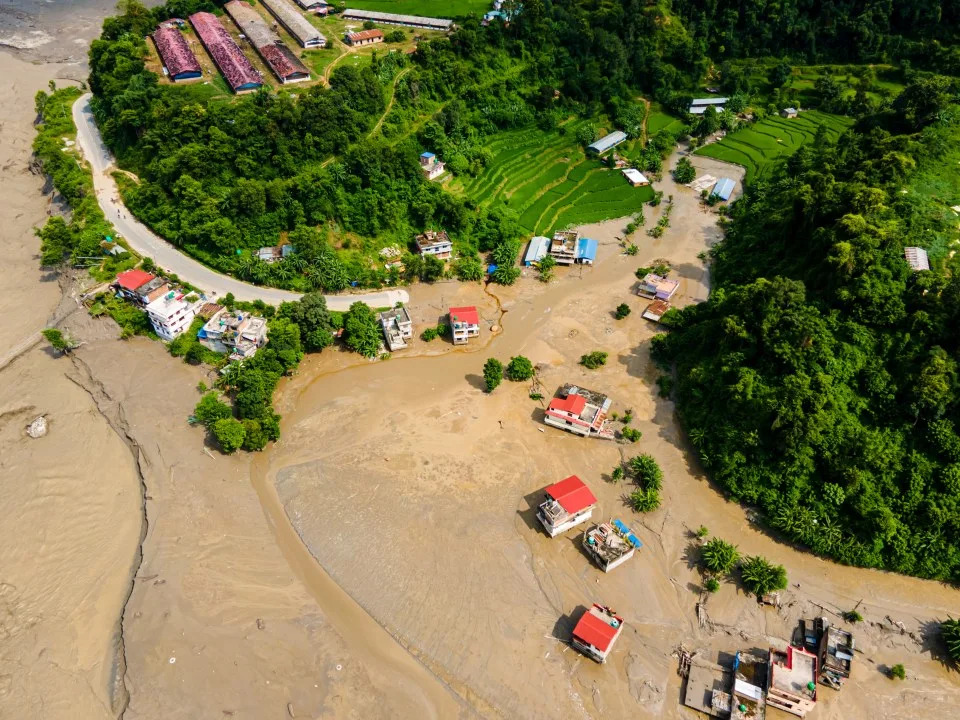
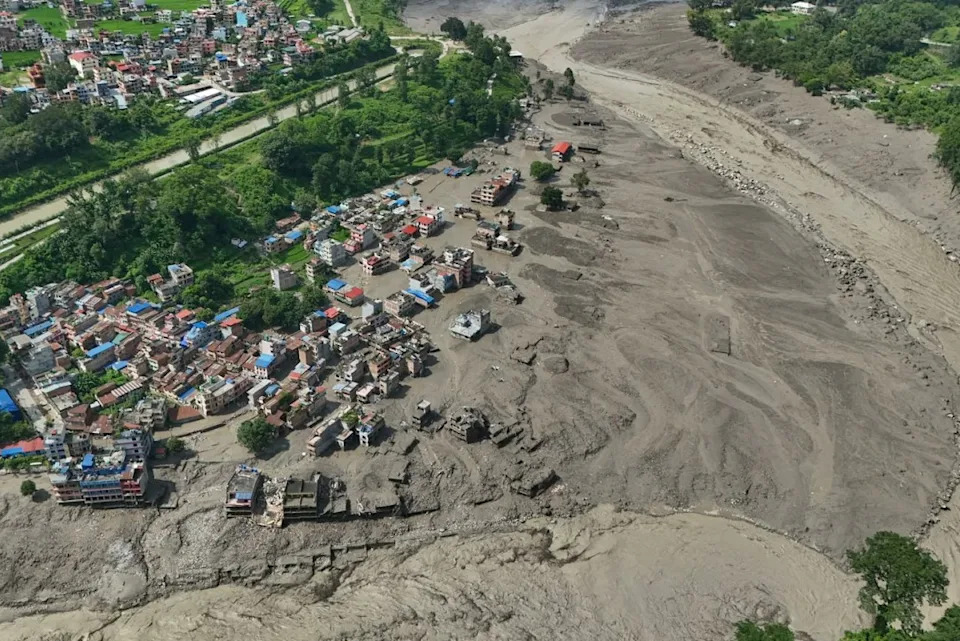
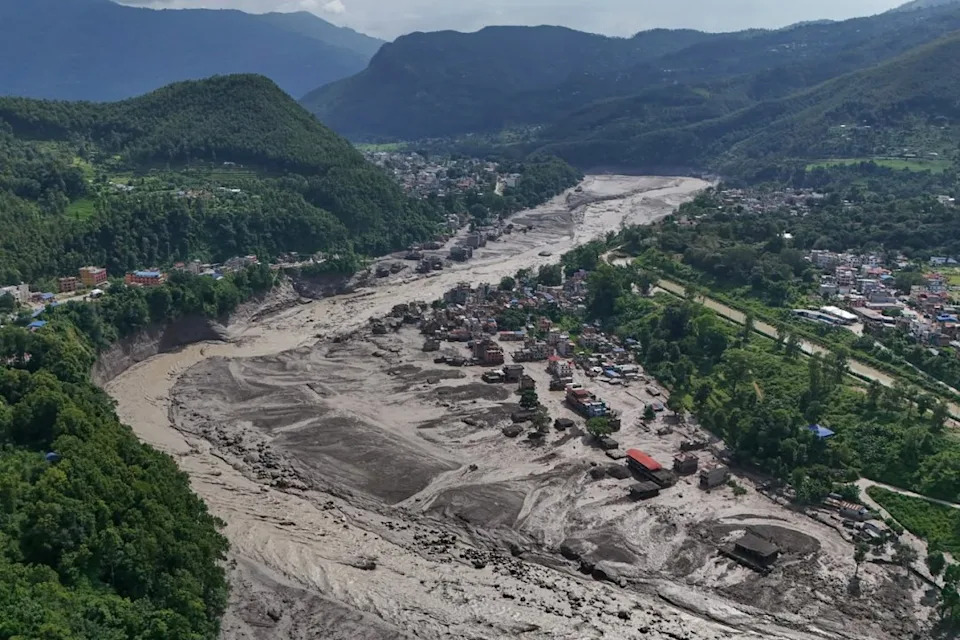
Aerial view shows flood-damaged areas after a flash flood swept through the Bhotekoshi River in Nuwakot, Nepal, on August 26, 2026. The flooding caused widespread damage to homes, roads, bridges and other infrastructure in the area, while many people remain missing; the figures are still developing (Photo by Ambir Tolang/NurPhoto via Getty Images)

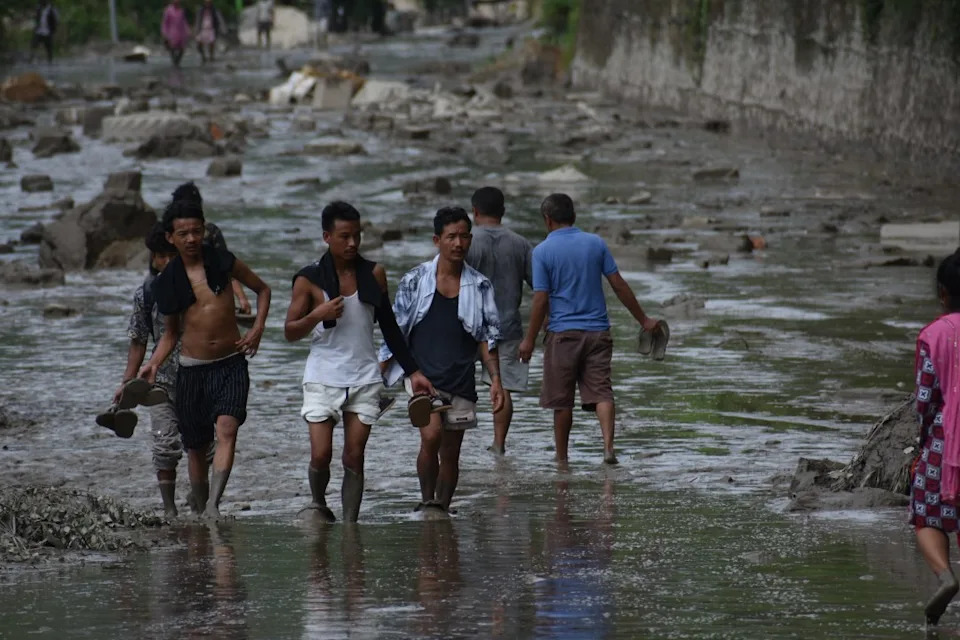
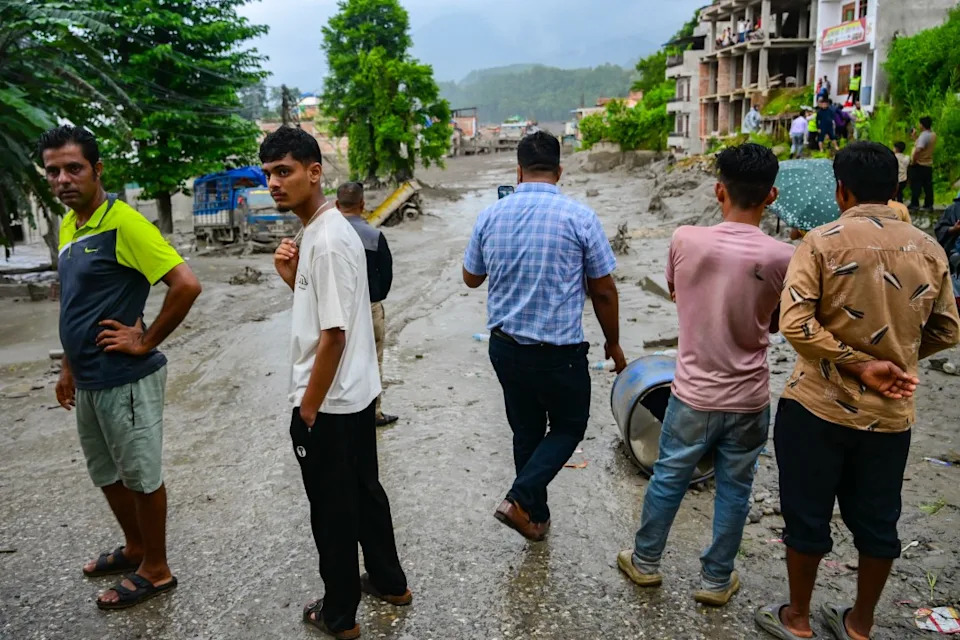
NUWAKOT, NEPAL- AUGUST 26: People walk along a road covered by floodwaters in Nuwakot, Nepal, on August 26, 2026. The powerful flood, originating from the Tibet region of China, swept into Nepal, causing widespread flooding and damage to roads, bridges, homes and other infrastructure. (Photo by Sunil Pradhan/Anadolu via Getty Images)

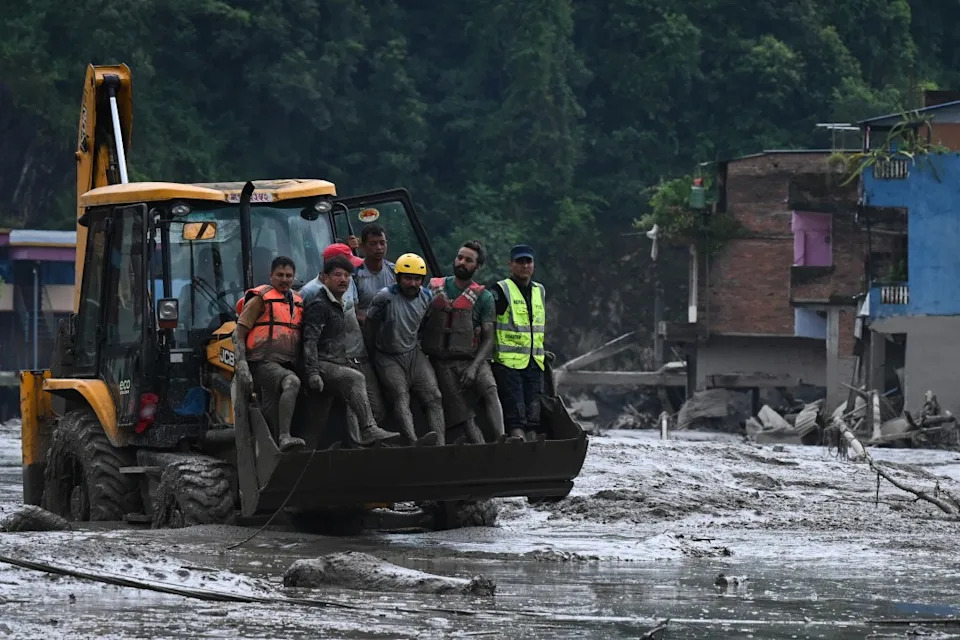
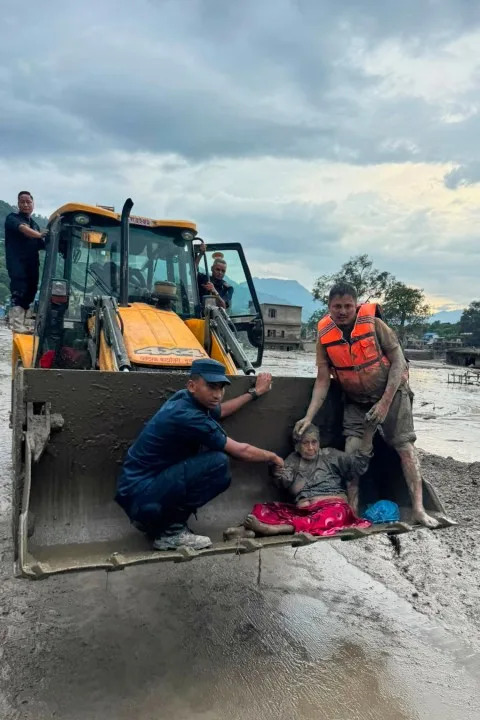
Rescuers use an excavator to transport victims and survivors along the streets submerged by mud following flash floods and a landslide disaster in Devghat in Nepal's Nuwakot district on August 26, 2026. A massive flood and landslide disaster on the Nepal-Tibet border killed at least 103 people on August 26, 2026 and left several hundred missing, many of them foreign tourists. Aid workers said entire settlements had been "wiped out". Some 403 tourists -- 341 of them foreigners -- were unaccounted for several hours after the disaster struck, according to the tourism ministry. (Photo by PRAKASH MATHEMA / AFP via Getty Images)

Damaged houses stand precariously near the swollen, debris-choked banks of the Trishuli River after flash floods in Nepal's Nuwakot district on Wednesday, Aug. 26, 2026. (AP Photo/Niranjan Shrestha)

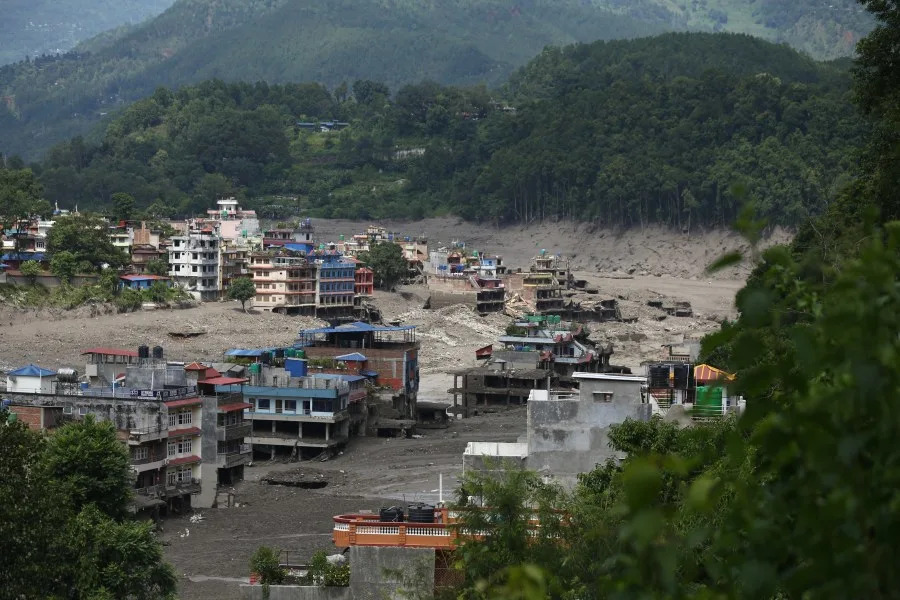
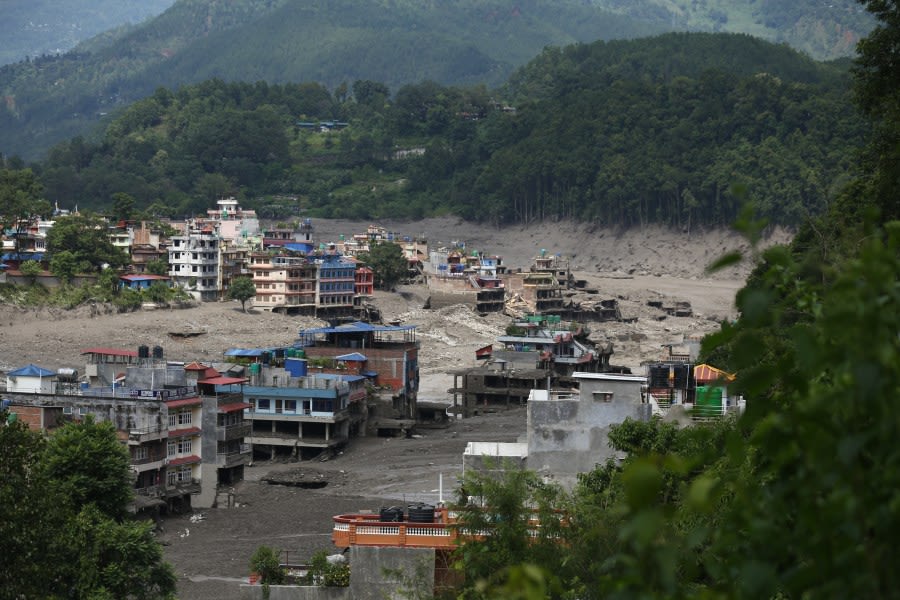
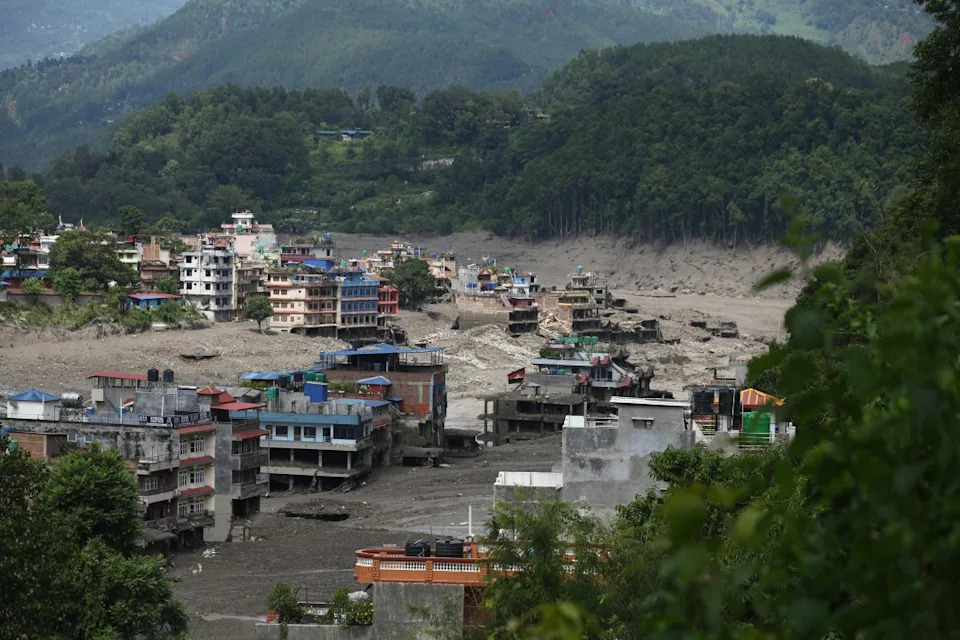
An aftermath view of flash floods and mudslides along the Trishuli River in Nuwakot, Nepal, on August 26, 2026. A flash flood swept through Nepal's northern border region after an ice-and-rock avalanche, reportedly triggered by an earthquake, caused a sudden surge in the Lhende River on the Nepal-China border and sent large volumes of water, mud and debris downstream into the Bhote Koshi and Trishuli river systems. The event damaged settlements in Rasuwa and Nuwakot districts, sweeping away homes, roads, bridges, vehicles and other infrastructure and damaging hydropower and power facilities. In Nuwakot, riverside settlements including Trishuli Bazaar, Devighat, Betrawati and surrounding areas suffered damage, with homes swept away and large quantities of mud and debris deposited across communities. The flood also disrupted communications and transportation routes and prompted authorities to evacuate vulnerable riverside communities and issue warnings along the Bhote Koshi, Trishuli and Narayani rivers. The death toll from the disaster had climbed to 97, while at least 384 tourists and travelers, including foreign nationals, as well as soldiers and police personnel, were reported missing as search-and-rescue operations continued. Nepal Army, Armed Police Force and Nepal Police personnel were deployed to affected areas, while rescue operations were also underway on the Chinese side of the border. Authorities continued to assess the scale of casualties and destruction as access to several affected areas remained difficult because of damaged roads, bridges, heavy sediment and continuing flood risks. The disaster has been described as one of the most severe sudden flood events to strike the Nepal-China border region in recent years. (Photo by Safal Prakash Shrestha/NurPhoto via Getty Images)

An aftermath view of flash floods and mudslides along the Trishuli River in Nuwakot, Nepal, on August 26, 2026. A flash flood swept through Nepal's northern border region after an ice-and-rock avalanche, reportedly triggered by an earthquake, caused a sudden surge in the Lhende River on the Nepal-China border and sent large volumes of water, mud and debris downstream into the Bhote Koshi and Trishuli river systems. The event damaged settlements in Rasuwa and Nuwakot districts, sweeping away homes, roads, bridges, vehicles and other infrastructure and damaging hydropower and power facilities. In Nuwakot, riverside settlements including Trishuli Bazaar, Devighat, Betrawati and surrounding areas suffered damage, with homes swept away and large quantities of mud and debris deposited across communities. The flood also disrupted communications and transportation routes and prompted authorities to evacuate vulnerable riverside communities and issue warnings along the Bhote Koshi, Trishuli and Narayani rivers. The death toll from the disaster had climbed to 97, while at least 384 tourists and travelers, including foreign nationals, as well as soldiers and police personnel, were reported missing as search-and-rescue operations continued. Nepal Army, Armed Police Force and Nepal Police personnel were deployed to affected areas, while rescue operations were also underway on the Chinese side of the border. Authorities continued to assess the scale of casualties and destruction as access to several affected areas remained difficult because of damaged roads, bridges, heavy sediment and continuing flood risks. The disaster has been described as one of the most severe sudden flood events to strike the Nepal-China border region in recent years. (Photo by Safal Prakash Shrestha/NurPhoto via Getty Images)

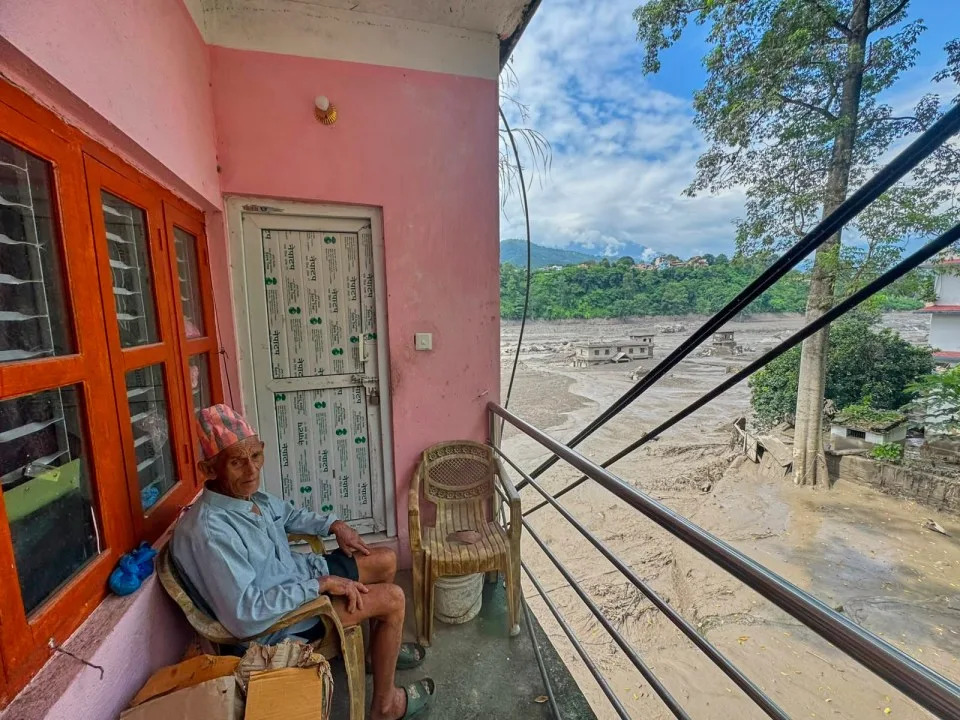
A resident sits on the balcony of his house surrounded by floodwaters and debris after flash floods caused the Trishuli River to swell in Nepal's Nuwakot district, Wednesday, Aug. 26, 2026. (AP Photo/Niranjan Shrestha)

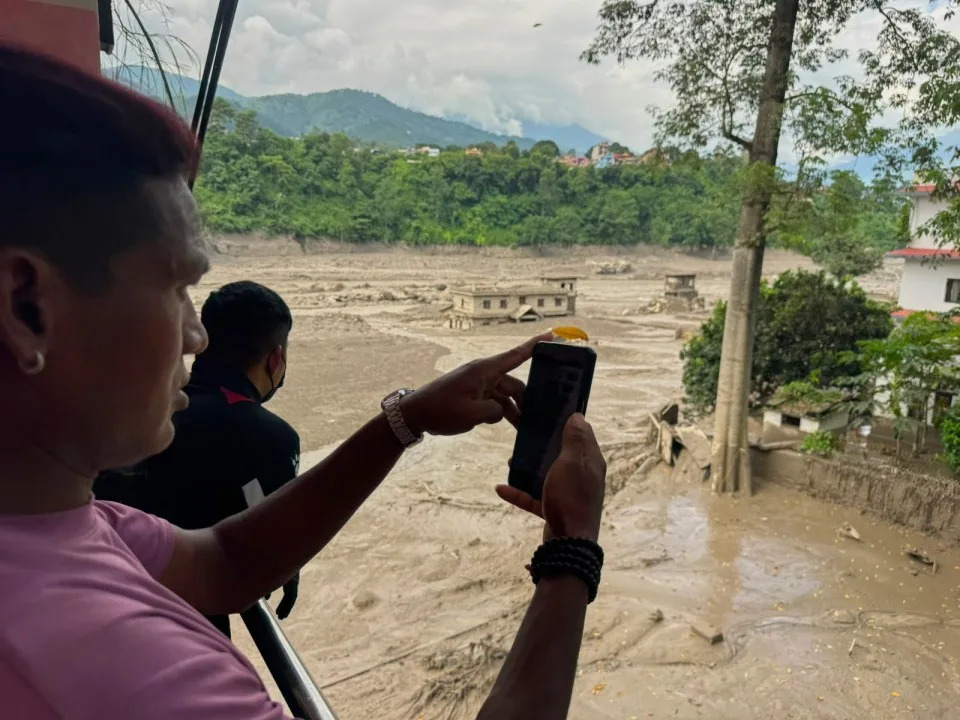
People take photographs and videos of the swollen, debris-choked banks of the Trishuli River after a flash floods in Nepal's Nuwakot district on Wednesday, Aug. 26, 2026. (AP Photo/Niranjan Shrestha)

along the Trishuli River in Nepal's Nuwakot district, Wednesday, Aug. 26, 2026. (AP Photo/Niranjan Shrestha)

Damaged houses stand precariously near the swollen, debris-choked banks of the Trishuli River after flash floods in Nepal's Nuwakot district on Wednesday, Aug. 26, 2026. (AP Photo/Niranjan Shrestha)

Rescuers use an earthmover to carry a victim of flash flooding to safety along the Trishuli River in Nepal's Nuwakot district, Wednesday, Aug. 26, 2026. (AP Photo/Niranjan Shrestha)

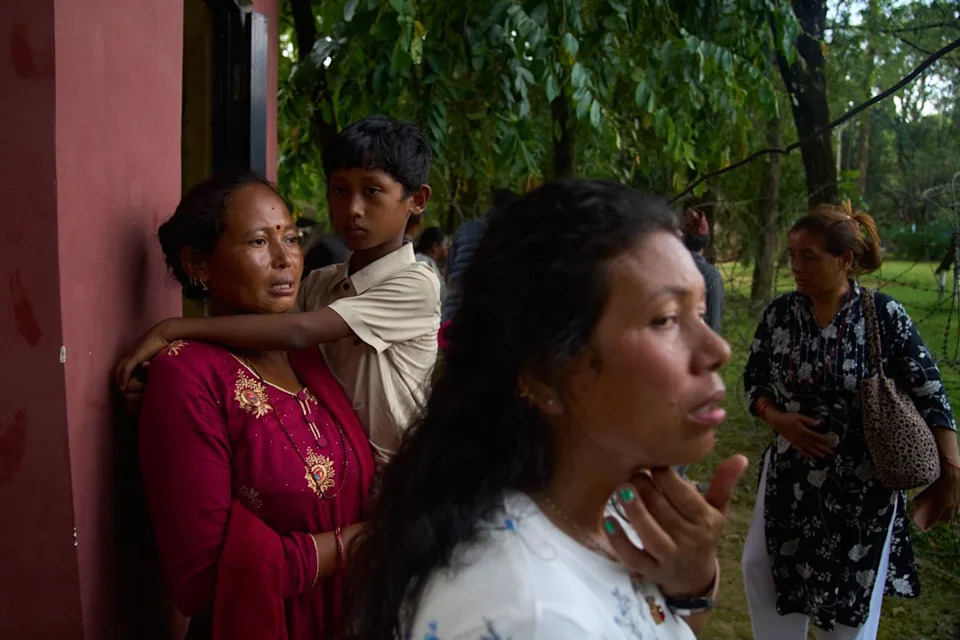
People wait for news of their relatives who are missing after flash flooding along the Trishuli River in Nepal's Nuwakot district, Wednesday, Aug. 26, 2026. (AP Photo/Niranjan Shrestha)

An injured of a flash flooding is brought to a hospital for treatment in Nepal's Nuwakot district, Wednesday, Aug. 26, 2026. (AP Photo/Niranjan Shrestha)

A woman cries as she searches for relatives missing after flash flooding along the Trishuli River in Nepal's Nuwakot district, Wednesday, Aug. 26, 2026. (AP Photo/Niranjan Shrestha)

Rescuers lay a rope way to look for surivors after flash flooding along the Trishuli River in Nepal's Nuwakot district, Wednesday, Aug. 26, 2026. (AP Photo/Niranjan Shrestha)

People wait for news of their relatives who are missing after flash flooding along the Trishuli River in Nepal's Nuwakot district, Wednesday, Aug. 26, 2026. (AP Photo/Niranjan Shrestha)

A flood-damaged section of a highway in Nuwakot, Central Nepal, following the outburst of a glacial lake in Tibet on August 26, 2026. (Photo by Subaas Shrestha/NurPhoto via Getty Images)

A woman consoles a relative as they wait for news of family members missing after flash flooding along the Trishuli River in Nepal's Nuwakot district, Wednesday, Aug. 26, 2026. (AP Photo/Niranjan Shrestha)

The U.S. Geological Survey first reported a magnitude 4.4 earthquake early Wednesday, about 41 miles north of Kathmandu, near the border. The USGS later updated its report to call the shaking a magnitude 5.2 landslide.

Before-and-after satellite imagery of the region from Planet Labs, reviewed by Reuters, showed lush green mountainside now buried under brown debris and sediment.

"It's confirmed that a substantial portion of that glacier snout collapsed to initiate the event - probably including or entraining a fair amount of rock and sediment," said Vikram Gupta, who specializes in engineering geology and teaches at India's Sikkim University.

Officials warned residents in several districts to stay away from the banks of the Trishuli, Bhotekoshi and Narayani rivers. At least 19 bridges and nearly 25 miles of road were swept away. The Bhotekoshi flooded around 9 a.m. Wednesday, destroying several villages and hydropower projects, officials said.

The Associated Press and Reuters contributed to the report.

Copyright 2026 Nexstar Media, Inc. All rights reserved. This material may not be published, broadcast, rewritten, or redistributed.For the latest news, weather, sports, and streaming video, head to NewsNation.