yahoo Press
Iran updates: Spokesperson calls US sanctions on Tehran ‘pure parody’
Images
1 / 6
2 / 6

3 / 6

4 / 6

5 / 6

6 / 6
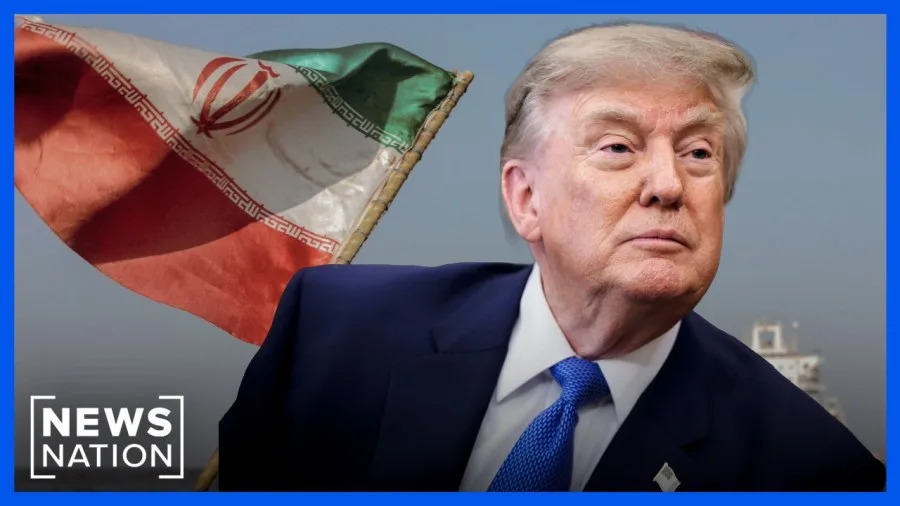
(NewsNation) — Iranian foreign ministry spokesman Esmaeil Baqaei mocked the United States economic pressure to isolate Tehran, stating the policy "has reached pure parody."

"It turns to Bahrain - a country with virtually no meaningful economic exchange with Iran - to prove that its "coalition" is working," he wrote on social media, referring to an earlier call between Treasury Secretary Scott Bessent and the Bahraini finance minister.

"It then "stops" Iranian sports and academic exchanges that had already been effectively dead for years," he continued. "It is sanctioning the already sanctioned and calling the empty space a coalition."

It comes as the conflict in the Middle East will hit the six-month mark Friday.

 Iranians selling organs like kidneys to pay for basic necessities, refugees say

When President Donald Trump launched the war with Iran in late February, he initially forecast it would last four to five weeks. There's still no off-ramp in sight despite Trump's repeated assertions the war has been won or a deal to resolve it was nearly complete.

A June memorandum of understanding designed to pave the way to end the war has fallen by the wayside. U.S. stockpiles of key weapons have diminished and the Trump administration has pivoted to pressuring Iran economically rather than launching more strikes.

One of the prime goals now — reopening the Strait of Hormuz — was not one of Trump's original objectives. The waterway had been a vital shipping lane through which about 20% of the world's oil passed.

But Iran seized on it as a chokepoint for the global economy, and it has been largely closed since the war started, driving up prices for fuel and fertilizer needed for farms and creating economic and political pressure in the U.S.

Iran and Oman are still working on the details of an agreement on the Strait of Hormuz, a senior Iranian source told Reuters Wednesday, after Iran's Revolutionary Guards said the two countries had agreed on how to share the waterway and its revenues.

The spokesperson, echoing Tehran's official stance, also said the strait would not open unless the U.S. met Tehran's conditions under an interim ceasefire agreement struck in June, which later unraveled. Those conditions include an end to the U.S. blockade on Iranian ports, compensation and removal of sanctions.

Iran and Oman have held on-and-off talks for weeks about controlling traffic through the strait, which handled one-fifth of global oil and liquefied natural gas shipments before the war began in February.

Most shipping has since been shut down, driving global energy prices higher, as Tehran and Washington have sought to assert control over the channel by imposing separate blockades.

"An agreement with Oman over the Strait of Hormuz has not been finalized," a senior Iranian source told Reuters Wednesday, adding the talks were continuing on the details of an accord.

A spokesperson for Iran's Islamic Revolutionary Guard Corps (IRGC) said Iran and Oman had reached an agreement on their shares of the territory and revenues.

"The Strait of Hormuz belongs to Iran and the country of Oman ... We have been in negotiations with Oman for about a month, and we have reached results that are acceptable to both sides," Hossein Mohebbi said in comments published by Iranian state media.

"In these negotiations, agreements have been reached regarding the share of each country in the waters of the Strait and the share of Iran and Oman in its revenues," he added.

It was not immediately clear at what stage of the negotiations the agreements had been reached. Iran said earlier this month that a deal on the strait was close.

Following talks Tuesday between Iran and Oman, Omani Foreign Minister Badr Albusaidi said he was "hopeful we will soon announce a temporary corridor for the Strait of Hormuz and practical arrangements to restore safe navigation."

The IRGC accused the U.S. of seeking to obstruct Iran's negotiations with Oman, saying this delayed an agreement.

"If the United States stops obstructing and returns to the agreement, we can open the Strait of Hormuz within the framework of the agreement reached," Mohebbi said. "If the United States does not accept our conditions, the Strait of Hormuz will not be opened under any circumstances."

Shipping traffic in the Strait of Hormuz rose slightly Thursday even as a standoff persisted between the U.S. and Iran, data showed, while the market monitored Iran-Oman talks about the waterway.

Visible commodity vessel transits at Hormuz totaled 10 on Wednesday, up slightly from eight on Tuesday, data from Kpler showed. This was below a 10-day moving average of about 15 vessels.

Two medium-range fuel tankers, a liquefied petroleum gas carrier, a Panamax-sized tanker, and three handymax-sized tankers entered the strait from the Gulf of Oman.

A medium-range fuel tanker, a bitumen tanker and a bulk carrier exited the waterway from the Gulf.

A tanker was hit by an unknown projectile in the Strait of Hormuz, causing a fire that was later extinguished, the United Kingdom Maritime Trade Operations agency said early Thursday.

Meanwhile, traffic slowed for a second day at another key waterway: the Bab el-Mandeb strait.

A total of 19 commodity vessels passed through Bab el-Mandeb on Wednesday, with six tankers exiting, including a very large crude carrier, down from 24 on the previous day, Kpler data showed.

Some vessels may be sailing in the key waterways with their transponders turned off and may be missed in the counts.

The Associated Press and Reuters contributed to this report.

Copyright 2026 Nexstar Media, Inc. All rights reserved. This material may not be published, broadcast, rewritten, or redistributed.For the latest news, weather, sports, and streaming video, head to NewsNation.