buzzfeed Press
How To Unclog A Toilet, Jump-Start A Car, And 29 Other Things You’re Somehow Expected To Know As An Adult
Images

1 / 20

2 / 20

3 / 20

4 / 20

5 / 20

6 / 20

7 / 20

8 / 20
9 / 20
10 / 20

11 / 20

12 / 20

13 / 20

14 / 20
15 / 20

16 / 20

17 / 20
18 / 20

19 / 20

20 / 20
I'm an Editorial Director at BuzzFeed who covers the internet’s funniest photos and jokes, weird human history, movie facts, and more.

HOW TO DO IT: You do not need to turn into Sheldon Cooper every time a restaurant hands you a check. For a quick estimate, 10% is easy to calculate — just move the decimal one place to the left — then double it for 20%. So if the bill is $46.80, 10% is $4.68 and 20% is $9.36. And yes, using your phone calculator is also allowed. Nobody gives you a medal for doing tip math in your head.

One thing to watch for: some restaurants automatically add a service charge or gratuity, especially for larger groups, so look over the bill first so you don’t accidentally add a full tip on top of a gratuity that’s already there.

HOW TO DO IT: Make sure there’s enough water in the bowl to cover the rubber part of the plunger. Get a good seal over the drain and push and pull firmly several times. The key is pressure, not angrily stabbing at the toilet like it has personally betrayed you.

HOW TO DO IT: I know this can seem weirdly stressful if you grew up in a time when using the phone to make your own appointments — or using the phone at all for its original purpose — wasn’t exactly part of everyday life. But really, it’s no big deal. Don’t overthink it.

All you have to do is say your name, explain what you need, ask what appointments are available, choose one, and write down the date and time. That’s it. Yes, you may have to speak to another human being. I’m sorry.

HOW TO DO IT: Sorry, childhood is over. There’s no Santa, and there probably isn’t some mysterious stranger online desperately trying to give you free shit. There are, however, plenty of people actively trying to separate you from your money, so treat your online life the same way you’d treat your wallet in public: pay attention and protect it. You wouldn’t walk down the street waving your wallet around, right?

Get an unexpected message demanding immediate payment, passwords, verification codes, gift cards, crypto, or personal information? Be suspicious. If something seems too good to be true, it probably is.

And if something seems urgent or scary, don’t panic and react. Stop and do a little research first. Don’t click a link in the message; go to the company’s official website yourself or call a number you know is legitimate. And always look closely at the sender’s actual email address — not just the display name. A lot of scam emails say they’re from your bank, Amazon, PayPal, etc., but the real address is something completely different and gives the game away.

Your bank does not urgently need $700 in Target gift cards.

HOW TO DO IT: First, my biggest tip for not ruining your clothes in the laundry is to check the care instructions before you buy them. If you mostly buy clothes that are easy to wash and don’t require dry cleaning, hand washing, “lay flat to dry,” or some other ridiculous ritual, you’re going to save yourself a lot of trouble.

With that said, before you wash your clothes at home, read the care labels, separate anything likely to bleed or require special treatment, use the appropriate water temperature, and don’t wildly overdose the detergent. And if something says “DO NOT TUMBLE DRY,” believe it.

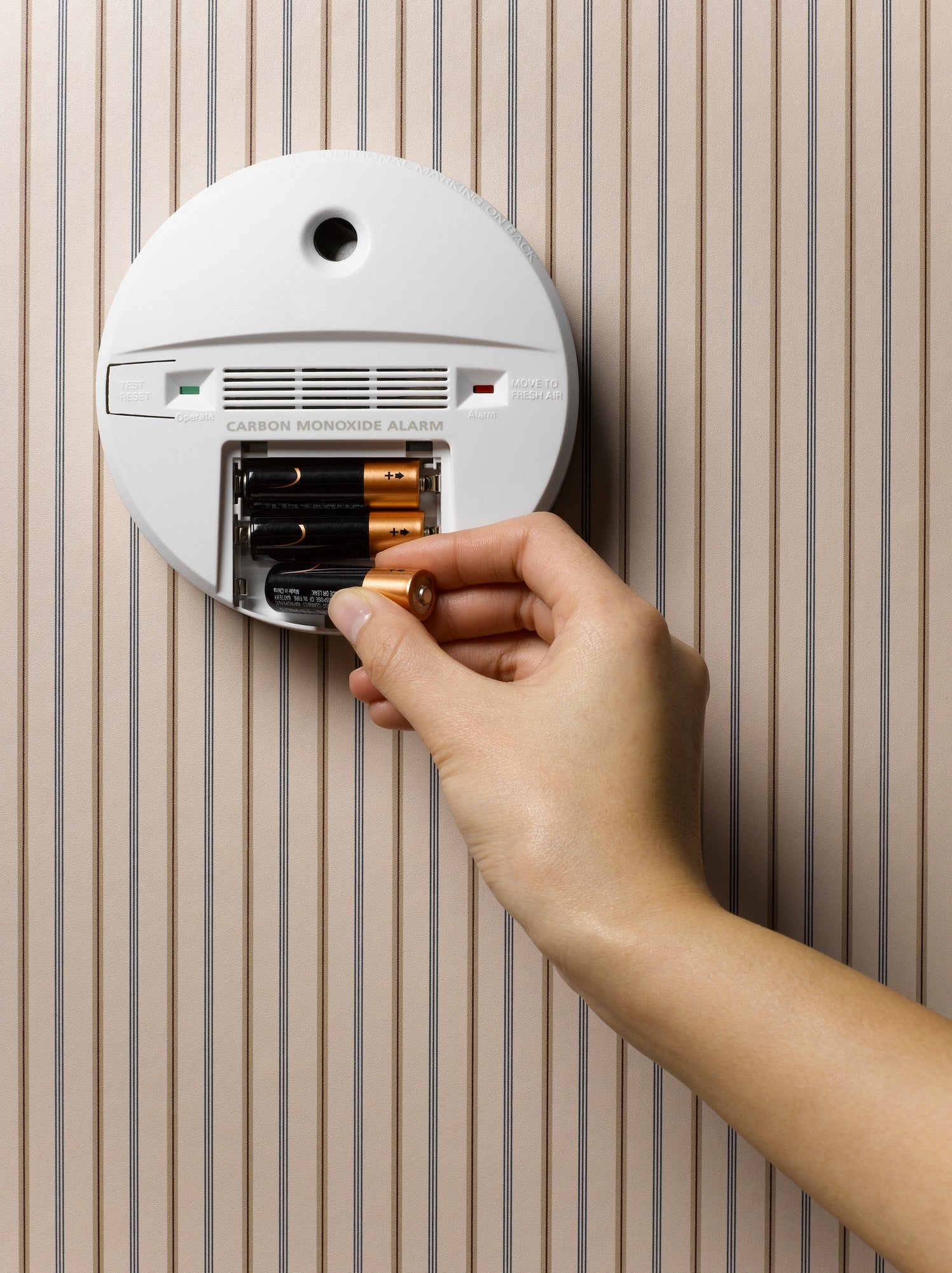
HOW TO DO IT: If your alarm has a replaceable battery, twist or open it and replace the battery with the type indicated inside. Some newer alarms have sealed batteries and need to be replaced as a whole unit instead, so check the instructions on yours.

Then hit the test button. You should hear the alarm’s loud test pattern — not just the occasional low-battery chirp. If it doesn’t test properly after you’ve checked the battery and instructions, replace the unit.

Most importantly, do not spend six months living with the chirp... chirp... chirp because you’ve decided that’s simply part of your home’s personality now.

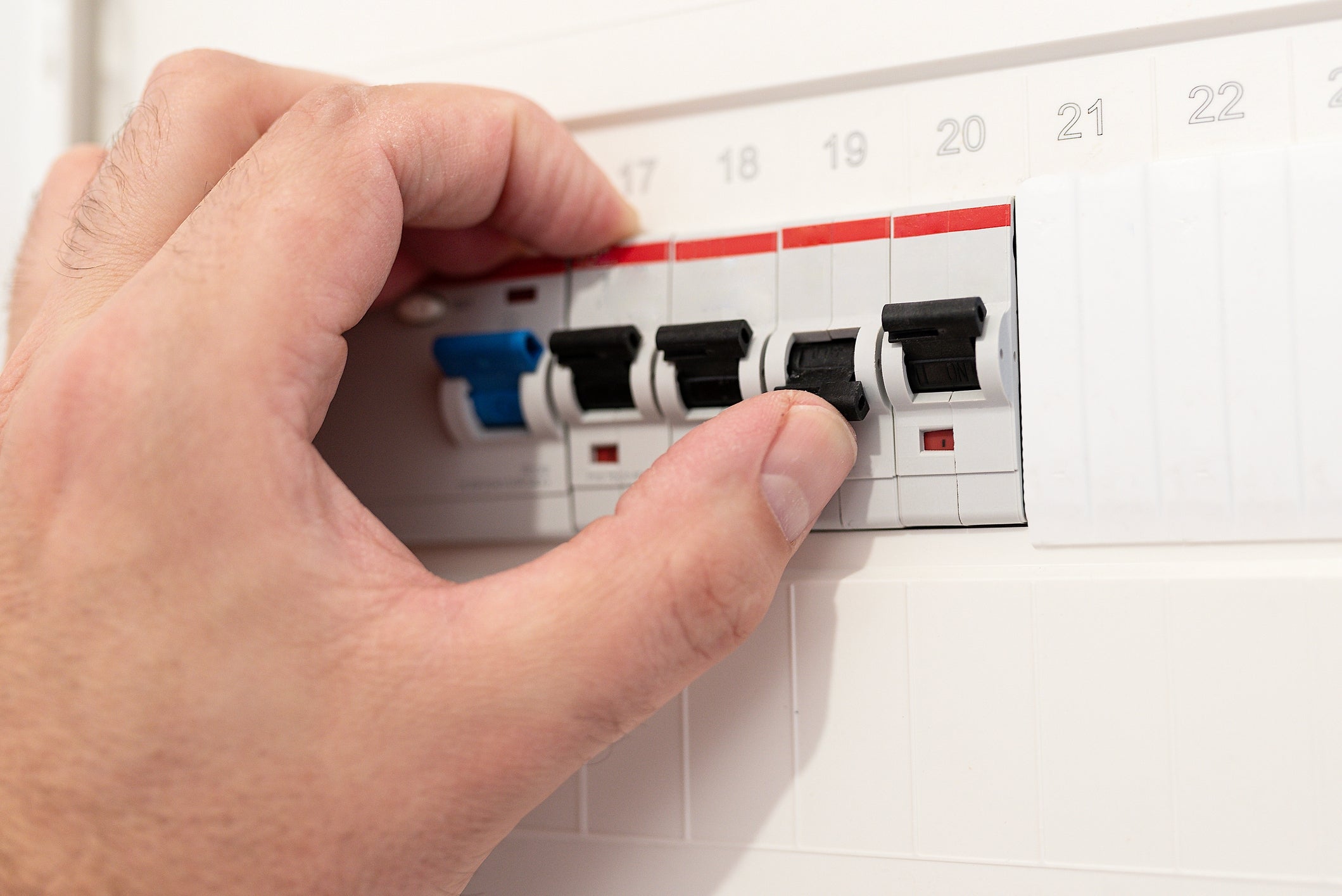
HOW TO DO IT: If part of your house suddenly loses power but the rest is fine, you may have tripped a circuit breaker — basically a safety switch that shuts off electricity when a circuit is overloaded or has a problem. Thankfully, resetting one is E-Z.

Find your electrical panel and look for a breaker that’s sitting between ON and OFF or otherwise looks different from the others. Push it fully to OFF, then back to ON. That’s it.

If it immediately trips again, though, don’t keep resetting it. Unplug whatever may have overloaded the circuit, and if it keeps happening, call someone who knows what the heck they're doing.

HOW TO DO IT: First, only try to use an extinguisher on a small, contained fire when you have a clear path to get out. Remember PASS: Pull the pin, Aim at the base of the fire, Squeeze the handle, and Sweep from side to side.

And if the fire is spreading, forget being a hero and get out.

HOW TO DO IT: Some dads will tell you to try to fix almost everything yourself — or, more likely, come over and try to do it themselves. Not me. I don’t want anyone to get killed, lol.

If the problem involves serious electrical work, gas lines, structural damage, dangerous heights, major plumbing, significant car repairs, or anything where getting it wrong could kill you or destroy your house, call someone qualified.

Perhaps the ultimate adult life skill is realizing that watching two YouTube videos does not make you a licensed electrician.

HOW TO DO IT: Cooking doesn’t mean you have to make something fancy like Beef Wellington every Tuesday. Really, you just want to be able to make food yourself so you’re not ordering out or microwaving processed food every night.

The good news is there’s a pretty simple formula: protein + vegetable + starch + a couple of seasonings.

Chicken, broccoli, rice, garlic powder, paprika, and pepper? Dinner.

Eggs, potatoes, spinach, onion powder, and paprika? Also dinner.

Beans, vegetables, tortillas, cumin, chili powder, and garlic? Look at you, cooking.

HOW TO DO IT: One way: have a toddler and be forced to learn how to cook eggs for them when they hate almost everything else.

Alternatively, for basic scrambled eggs, whisk them with a pinch of salt, add them to a lightly buttered pan over medium-low heat, and gently move them around until they’re just set.

Congratulations: you now possess enough culinary knowledge to survive breakfast.

HOW TO DO IT: The TL;DR is to follow the instructions and don't fuck with it as it cooks. (Sorry, dads swear sometimes too!)

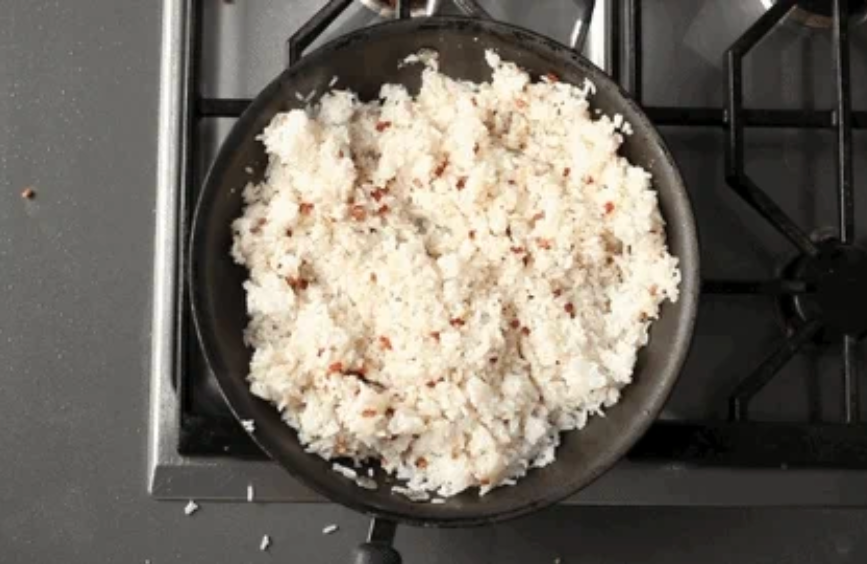
Longer version: Follow the rice package’s water-to-rice ratio, bring it to a boil, cover it, lower the heat, and leave it alone until the specified cooking time is up. Then remove it from the heat and let it sit covered for a few minutes. Rice rewards people who stop messing with it.

HOW TO DO IT: Sorry, you can’t use a butter knife exclusively as an adult. Keep your chef’s knife properly sharp, stabilize the cutting board so it doesn’t slide around, curl the fingers of your non-knife hand into a “claw,” and cut away from yourself.

A dull knife usually requires more force and is more likely to slip, which is why a properly sharp knife is actually safer to work with.

HOW TO DO IT: Buy an instant-read food thermometer and use it. Insert it into the thickest part of the food, without touching bone, and wait for the reading to settle. Then check it against the USDA’s safe temperature guidance for whatever you’re cooking.

For something like a steak, chicken breast, or pork chop, check a couple of spots so you don’t accidentally measure the hottest part while the center is still undercooked.

“It looks done-ish” is not a temperature.

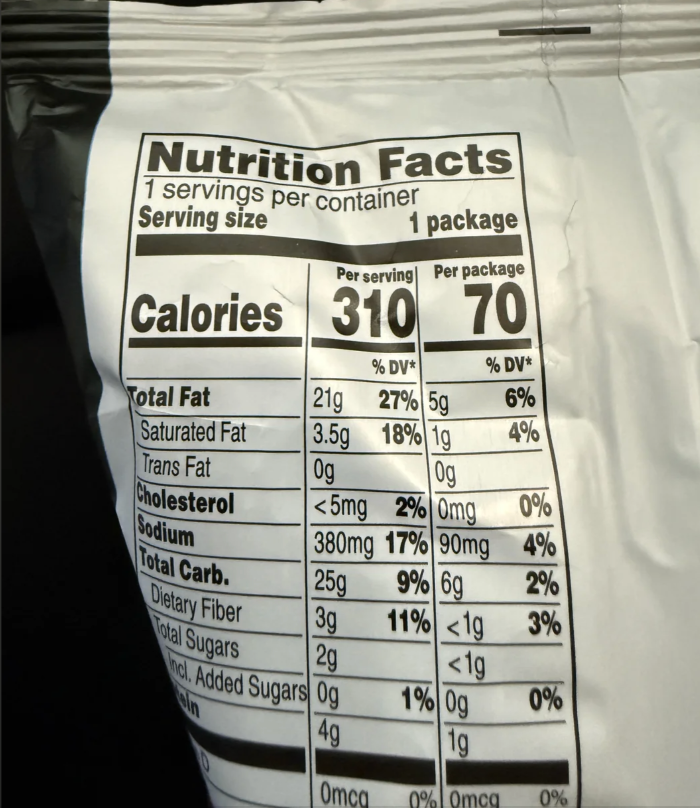
HOW TO DO IT: Start with the serving size, because everything else on the label is based on it — and this is where a lot of evil food companies will try to trick you into thinking something is healthier than it really is. For example, a cereal might brag about having only 120 calories, but then you look closer and realize that’s for a serving of half a cup. Meanwhile, another cereal sounds more caloric because it has 180 calories per serving, but its serving size is per cup (if the serving size were half a cup, like the first cereal, it would have only 90 calories). So you gotta be smart! Don't let them trick you into eating more calories, sugar, sodium, etc. than you intended.

HOW TO DO IT: You can’t just yell “MOM!” anymore, unfortunately.

Start by blotting — not aggressively rubbing — the stain, and check the clothing label before treating it. Different stains require different treatments, so look up the specific stain before introducing random chemicals to the situation.

And whatever you do, don’t put the garment in the dryer until the stain is gone. Heat can set it permanently.

HOW TO DO IT: Thread a needle, knot the end, push it through the fabric and buttonholes several times, then knot the thread securely on the back.

You do not need to become Betsy Ross. The goal is simply for the button to still be attached tomorrow.

HOW TO DO IT: Check the fabric-care label and use the appropriate heat setting. For a button-down shirt, do the collar and cuffs first, then the sleeves, then each side of the front, then the back, sliding the shirt across the ironing board as you go. And keep the iron moving so you don’t scorch anything.

If irons frighten you, a garment steamer is basically the life cheat code.

HOW TO DO IT: First, check your owner’s manual, especially if you have a hybrid, EV, or a car with designated jump points. If its instructions differ from these, follow the manual.

With both cars off, find the battery terminals. The positive terminal is marked with a “+” sign and is often covered by a red cap; the negative terminal is marked with a “–” sign and is usually black or uncovered. Don’t guess — look for the symbols.

Then connect the cables in this order: red clamp to the dead battery’s positive (+), red to the good battery’s positive (+), black to the good battery’s negative (–), and the final black clamp to an unpainted metal point on the dead car, away from the battery.

Start the good car, let it run for a minute or two, then try starting the dead one. Once the dead car starts, remove the clamps in reverse order, keeping the metal clamps from touching one another.

And yes, this is one of those tasks that feels much scarier than it actually is — as long as you follow the instructions and don’t start improvising.

HOW TO DO IT: First, if you’re somewhere genuinely dangerous — a freeway shoulder, a blind curve, unstable ground — don’t try to prove anything. Call roadside assistance. I’ve called AAA plenty of times and somehow survived the humiliation.

If you’re somewhere safe and flat, engage the parking brake, loosen the lug nuts slightly, jack the car up using the proper jack point shown in your owner’s manual, remove the wheel, put on the spare, hand-tighten the lug nuts, lower the car, and then tighten the nuts securely in a star pattern.

If you’re using a temporary spare, check its speed and distance limits in your manual or on the tire itself.

HOW TO DO IT: Find the recommended PSI (pounds per square inch — the unit used to measure the air pressure inside your tire) on the sticker inside the driver’s-side door. That sticker tells you what the tire pressure should be.

And importantly, the number you want is not the maximum pressure printed on the tire itself.

Use a tire-pressure gauge when the tires are cold, then add or release air as needed until you reach the recommended PSI.

HOW TO DO IT: On cars with a dipstick, park on level ground and follow your owner’s manual about whether the engine should be warm or cool. Pull the dipstick out, wipe it clean, put it all the way back in, then remove it again and check whether the oil falls between the minimum and maximum marks.

If it’s low, check the manual for the correct type of oil and add a little at a time instead of dumping in half a jug and hoping for the best.

And if your newer car checks the oil electronically, congratulations: the car has done half the assignment for you.

HOW TO DO IT: Learn the difference between these four things and you’ll be golden:

Your statement balance — the total amount you owed when your most recent billing cycle ended.

Your minimum payment — the smallest amount you’re required to pay by the due date.

Your due date — the date by which your payment must be received to avoid being late.

Your APR — the annual percentage rate, or the interest rate you’ll pay on balances you carry.

Here’s my most important “nagging Dad” tip: Paying only the minimum can keep you in debt for an extremely long time. Whenever possible, pay your full statement balance by the due date.

If you have a card with a 22% APR and owe $50, but pay that $50 statement balance off on time, you still only owe the credit-card company $50. No interest. Simple!

But to see how interest can snowball, imagine that $50 balance just sitting there untouched at roughly that same APR. After a year, it would be around $62.

You might be thinking, Wait, 22% of $50 is only $11. And you’re right! But credit-card interest generally accrues as your balance grows, so over time you can wind up paying interest on interest that was previously added too. Leave that same theoretical $50 compounding for five years and it could grow to roughly $150 — about three times what you originally spent.

And real life can be even worse. Miss a required payment and you may get hit with a late fee; once you’re 30 days past due, the delinquency may also be reported to the credit bureaus and hurt your credit. Depending on the card and circumstances, other penalties may apply too.

So listen to Dad and pay off that statement balance whenever you can.

HOW TO DO IT: This isn’t hard to do. The hard part is making yourself actually sit down at the table and do it. But you should — and honestly, forcing yourself to do it is kind of the adulting part.

Once you’re sitting there, it’s simple: write down your monthly take-home income, then list your fixed bills; necessities that change month to month, like groceries and gas; debt payments; savings; and money you spend on fun or other non-essentials.

If the money going out is consistently greater than the money coming in, congratulations: you have identified the central plot problem.

HOW TO DO IT: Check your gross pay (the total amount you earned before anything is taken out), taxes withheld, benefits and other deductions, and your final net pay (the amount you actually take home after taxes and deductions).

Every once in a while, make sure your hours, salary, retirement contributions, and other deductions actually match what you expect. Payroll departments are staffed by humans, unfortunately, and humans make mistakes.

HOW TO DO IT: A 401(k) is a retirement account offered through many employers that lets you invest part of your paycheck, often with tax advantages. If your employer offers matching contributions, find out exactly how the match works — because turning down free money from your employer is an especially bleak form of adulting.

And yes, I know: putting money into retirement means taking home a little less money now, which is deeply annoying when you already have rent, bills, taxes, groceries, and 400 other things trying to eat your paycheck. But if you can afford to contribute, it’s one of those boring, responsible things Future You will be extremely grateful you did.

This money is meant for retirement, and the government gives you reasons not to raid it early. With a traditional 401(k), withdrawals before age 59½ generally mean owing income taxes and may also trigger a 10% early-withdrawal penalty, although there are exceptions. In other words: don’t treat your 401(k) like a backup checking account.

The whole point is to build up a pile of money you can actually live on when you’re older and, ideally, would like to stop working someday. And that matters more than ever because traditional pensions are way less common than they used to be, which means much more of the burden of paying for retirement now falls on you.

HOW TO DO IT: Checks are increasingly becoming one of those things from the olden days, like fax machines and Blockbuster, but every once in a while a landlord, government office, contractor, or other institution will still demand one.

Here’s what you do: write the date in the upper-right corner, write the name of the person or company you’re paying after “Pay to the Order of,” put the amount in numbers in the little box, then write the same amount out in words on the line below.

So $125.50 becomes “One hundred twenty-five and 50/100 dollars.” Draw a line through any unused space after the written amount so nobody can add anything, then sign the check on the bottom-right.

The memo line is optional, but it’s useful for writing what the payment is for — “August rent,” “registration fee,” etc.

And most importantly: make sure you actually have enough money in the account, because bouncing a check is a very dumb and potentially expensive way to learn how checking accounts work.

HOW TO DO IT: Here’s an easy one! Put the recipient’s name and address in the center, your return address in the upper-left corner, and the stamp in the upper-right.

HOW TO DO IT: Pick one secure location for things like birth certificates, passports, insurance information, tax records, wills, and Social Security documents.

It doesn’t have to be Fort Knox. An inexpensive locking document box is fine for basic organization, or, if you want more protection, get a small fire-rated home safe from somewhere like Home Depot, Lowe’s, or an office-supply store. The important thing is that your documents are somewhere secure and dry instead of scattered among six random drawers.

For documents that make sense to scan, keep encrypted or password-protected digital copies too. And make sure at least one trusted person knows where the important stuff is and how to access it in an emergency.

HOW TO DO IT: The hardest part is simply forcing yourself to make one before you need it.

Put adhesive bandages, sterile gauze, medical tape, antiseptic wipes, disposable gloves, tweezers, a thermometer, and other basic first-aid supplies together in one easy-to-find place. Check it every once in a while too, because somehow all first-aid kits eventually become three Band-Aids, an expired ointment, and a mystery pair of scissors.

And for anything serious — major bleeding, trouble breathing, loss of consciousness, etc. — stop playing Dr. House and call emergency services.

HOW TO DO IT: First, don’t freak out. Honestly, that’s the hardest part.

For a minor wound, apply firm, continuous pressure with clean gauze or cloth and keep pressing. Don’t act like an impatient kid and lift it every 15 seconds to see whether the bleeding has stopped.

If the bleeding is severe, spurting, won’t stop with firm pressure, or the person becomes faint or weak, get emergency medical help.