yahoo Press
Super Typhoon Champi becomes one of 2026’s strongest storms as it heads toward Taiwan and eastern China
Images
1 / 7

2 / 7

3 / 7
4 / 7
5 / 7

6 / 7

7 / 7
Authorities in Taiwan issued a land warning Thursday as Typhoon Champi closed in, and is expected to hit the northeast of the island.

Taiwan's transport ministry said 125 flights, mostly domestic, were canceled Thursday. In Japan, Japan Airlines, ANA and Skymark have canceled more than 100 flights through Sunday, disrupting travel for more than 11,000 passengers, Reuters reported. However, the interior ministry said no evacuations had been reported.

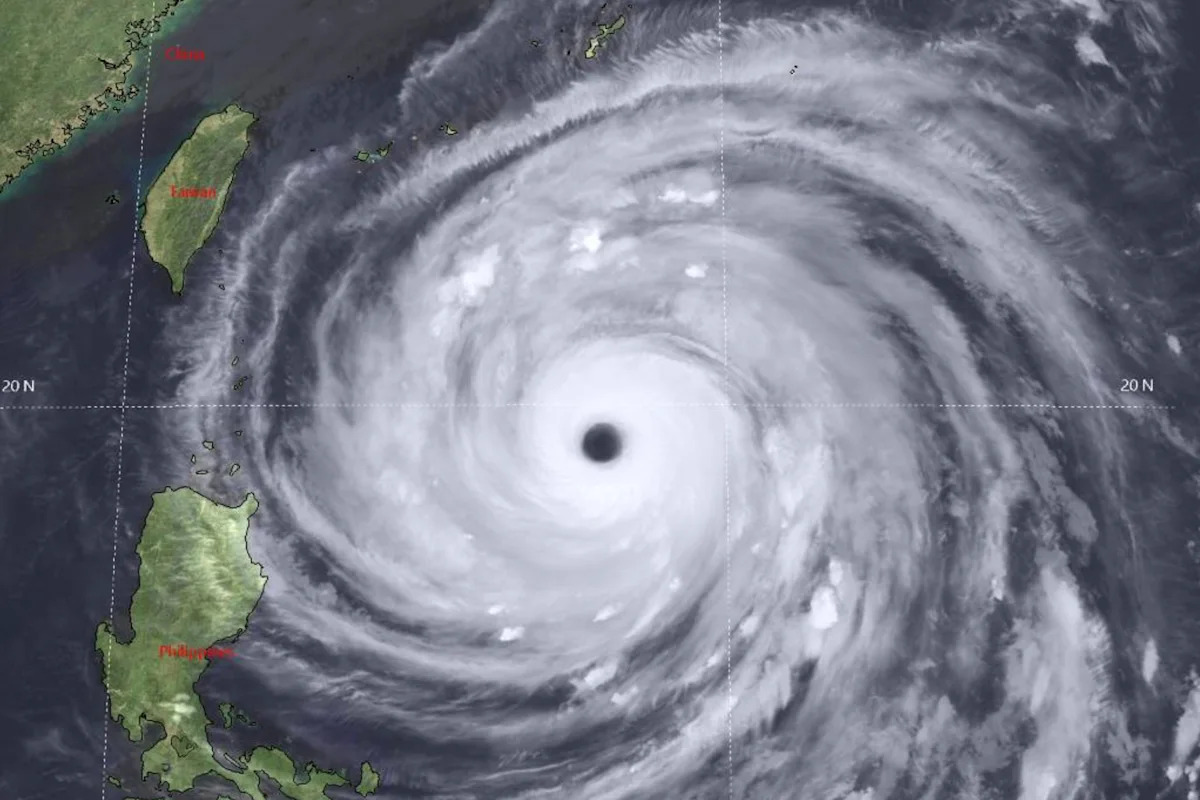
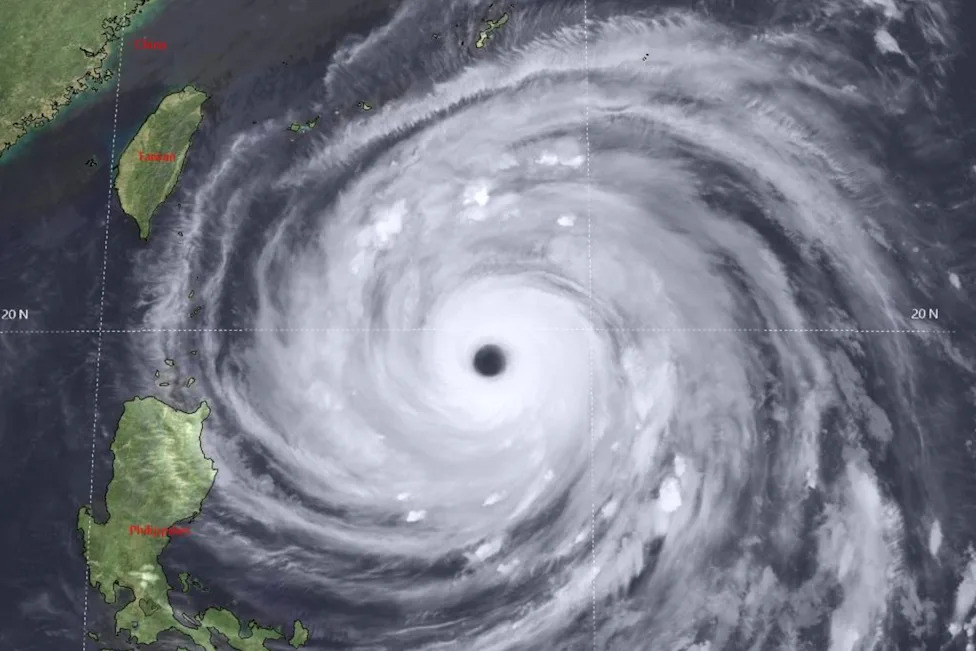
Super Typhoon Champi was recorded as one of the strongest storms on Earth in 2026 on Wednesday, but weakened slightly on Thursday.

The tropical cyclone tied April's Super Typhoon Sinlaku for the strongest 1-minute sustained winds of 2026, at 185 mph, which is equivalent to a Category 5 hurricane.

The typhoon is still packing gusts of more than 227 kph (141 mph) near its center, according to Taiwan's Central Weather Administration (CWA).

The Joint Typhoon Warning Center classifies a storm as a super typhoon when its 1-minute sustained winds reach at least 150 mph. That threshold falls within the Category 4 hurricane range.

"A tropical cyclone is a generic term used by meteorologists to describe a rotating, organized system of clouds and thunderstorms that originates over tropical or subtropical waters and has closed, low-level circulation," according to the National Oceanic and Atmospheric Administration.

The main difference between hurricanes and typhoons is geographic: Storms in the Northwest Pacific are called typhoons, while those in the North Atlantic and central and eastern North Pacific are called hurricanes.

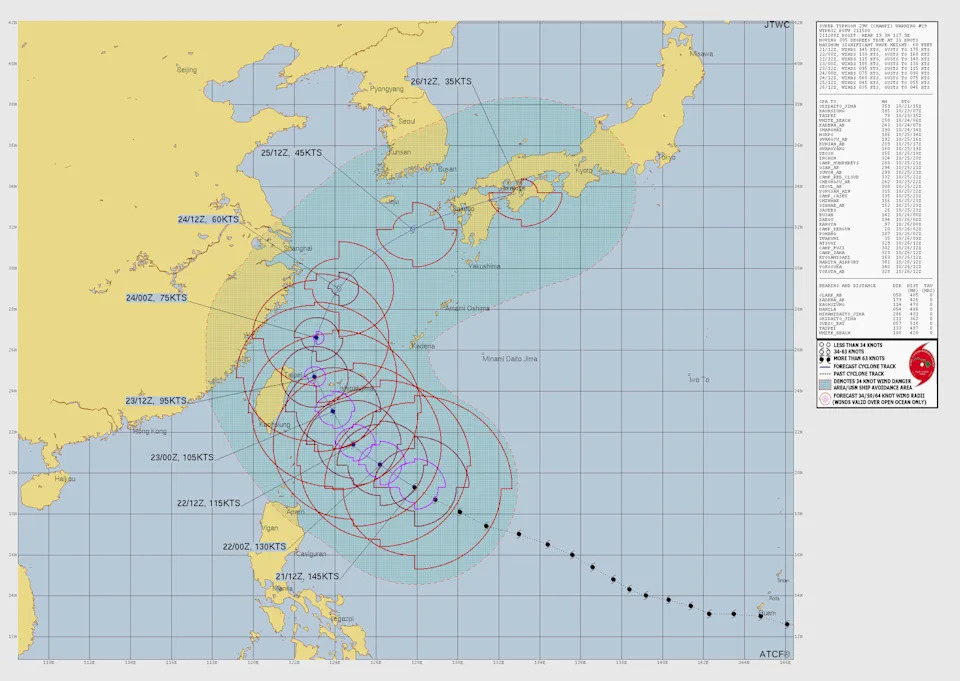
As of 11 a.m. Thursday, Champi was about 520 km (320 miles) southeast of Taiwan's southern tip. It is forecast to pass the northeast, then curve north toward China's coast and later into southern Japan, with its closest approach to Taiwan expected Friday.

Its radius has widened to 320 km (199 miles), enough to reach most of the island. Forecasters said the effects could last nearly two days, with heavy rain likely to continue in the north and center after the storm moves away Saturday afternoon.

The storm, which is barreling across the western Pacific Ocean, is expected to brush past the island's northeastern coast and gradually weaken as it approaches, passing northeastern Taiwan, turning north toward the Chinese coast and eventually moving into southern Japan, Reuters reported.

The storm is forecast to make a slight turn toward the northwest and weaken through Thursday.

Super Typhoon Champi's path.

Champi is expected to bring heavy rain and strong winds to parts of Taiwan and eastern China through the weekend, according to AccuWeather senior meteorologist Jason Nicholls.

Heavy rain is expected to affect Taiwan from Thursday night (Oct. 22) into Saturday (Oct. 24) and east-central China from Friday night (Oct. 23) through Sunday (Oct. 25). Rainfall is forecast to total up to 18 inches, with the heaviest rain expected in northeastern Taiwan.

Experts expect the typhoon to impact the island for two days, and have issued mobile phone alerts warning of waves of more than 6 meters (20 feet) in coastal towns, while total rainfall of nearly one meter (3 feet) was expected in northern mountain areas, including the hills near the capital Taipei, Reuters reported.

The heavy rain could cause flooding, mudslides, structural damage and transportation delays, according to AccuWeather.

Strong winds from Champi, with wind gusts up to 120 mph, are expected to affect Taiwan and eastern China from Thursday night into Sunday. The winds could cause structural damage, prolonged power outages and transportation delays.