Press
Who was behind the deadly church shooting in Jordan?
Images
1 / 9
2 / 9
3 / 9
4 / 9

5 / 9

6 / 9

7 / 9

8 / 9

9 / 9
Authorities are investigating the rare attack on a Christian church; the assailants remain unidentified and at large.

Save

Share

Security forces in Jordan are searching for three gunmen who opened fire at a church in Karak governorate on Friday, killing eight people and injuring dozens more, according to Jordan’s Ministry of Health.

King Abdullah II said those behind the attack would face the “harshest penalties”, as he offered his condolences to the victims’ families. He has ordered a review of the country’s security procedures for responding to terrorist attacks.

Authorities are calling this rare attack on a Christian place of worship an act of terror, with the perpetrators yet to be identified.

Here’s what we know about how the attack unfolded, and what was behind it.

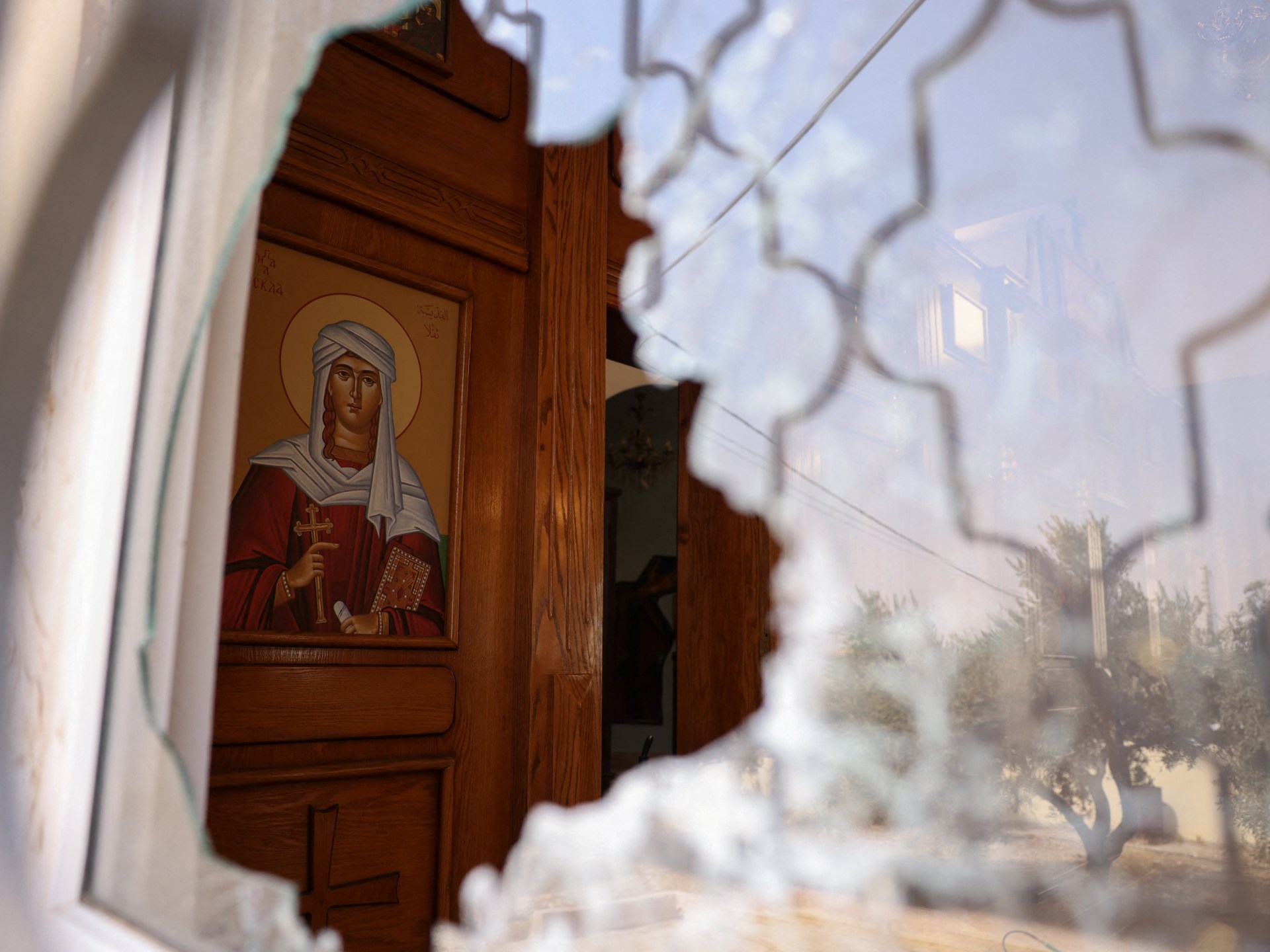
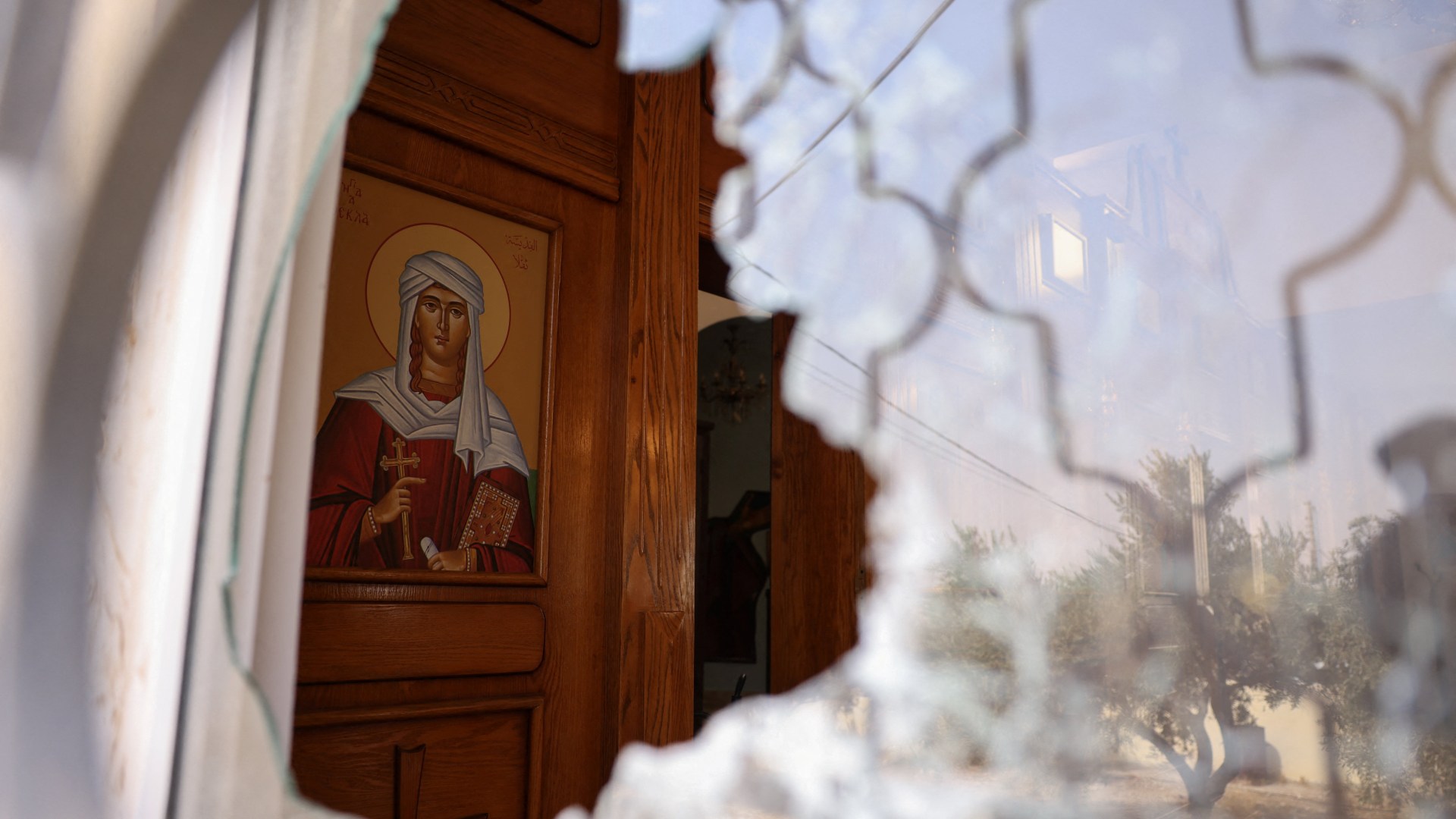
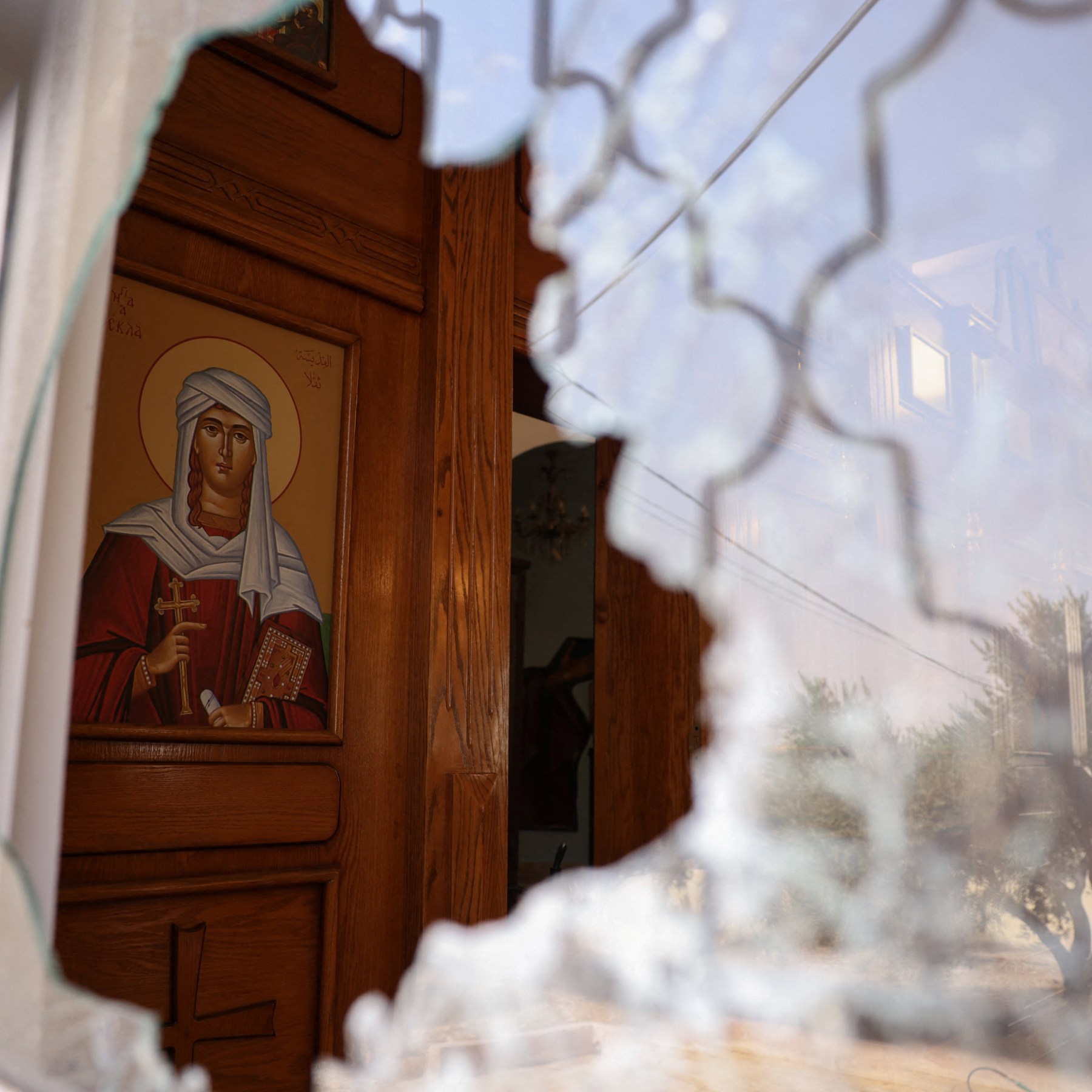
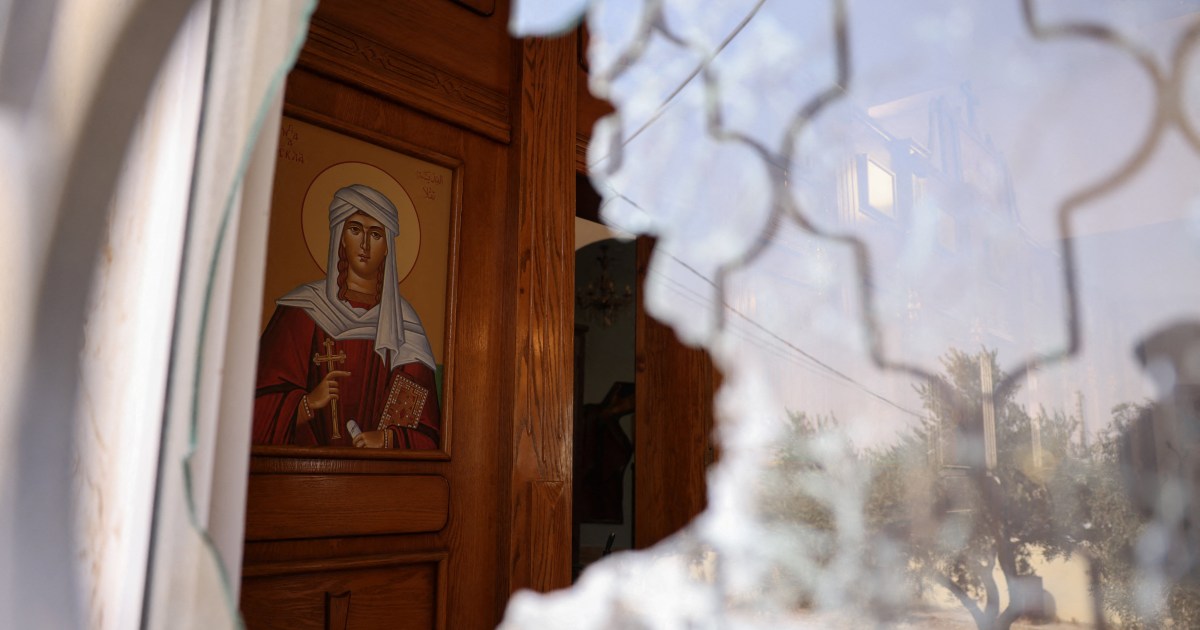
On Friday afternoon, three masked gunmen opened fire during a funeral in a Greek Orthodox church in the village of Hamoud.

Survivors said they heard an explosion just after the start of the service. Two attackers who arrived in a vehicle were joined by a third carrying a semi-automatic rifle. They entered the church and opened fire for several minutes.

One survivor, Nasser al-Burqan, a lawyer, told the Reuters news agency that one of the attackers, standing about two metres (6.5 feet) away, pointed a handgun at him and opened fire.

“When everything finally quietened down, I looked out the window behind me, and I saw two [assailants] – one was masked, the other was not; he was carrying a handgun,” said al-Burqan, a lawyer.

Later, his son, who had also been present, called him to say he had been shot in the leg and was being treated in hospital.

Tarek Ammarin, who was visiting a relative injured in the attack, now in hospital, said: “A massacre, a massacre in every sense of the word.”

Bahjat al-Rushda, mayor of Shihan village in Karak, joined a list of officials condemning what he called a “wicked” attack.

“God willing, this country will remain safe,” he said.

State news channel Al-Mamlaka reported that security forces were deployed to the church and were in pursuit of the two suspects who had arrived in a vehicle.

Eight people were killed in the shooting, including seven who died at the scene and one who succumbed to her injuries hours after the attack, Jordan’s Petra news agency reported on Saturday.

Of the 40 people injured, 27 are still in hospital. The Director of Prince Ali Military Hospital in Karak said one person is in critical condition, after undergoing surgery.

The identity of the three attackers has not been confirmed, with government statements referring to them as “unknown assailants”.

Security camera footage of the attack has been circulating online, however. Video broadcast by Al-Mamlaka shows three people shooting outside the church and running towards its entrance.

Other footage also shows the attackers opening fire on a group of men outside the building trying to flee.

Jordan’s Interior Minister Mazin Al-Farrayeh said a group of “extremists” that have “no relationship to humanity” were responsible for the attack, though no specific groups were mentioned.

Prime Minister Jafar Hassan said on Friday that the attack was a by-product of terrorist ideology and “blind extremism”, but did not give specifics about the attackers.

The motive remains unclear since the attackers’ identities have yet to be revealed.

Karak governorate is about 120km (75 miles) south of Amman and is home to many from Jordan’s Christian minority, which makes up about 300,000 of the country’s population of 11.5 million people.

Taylor Luck, senior Middle East correspondent at the Christian Science Monitor, told Al Jazeera that Jordan’s Christians “pride themselves on [their] interfaith solidarity and coexistence”.

He said that Christians and Muslims have lived side-by-side in Karak for generations and that if the attack had been carried out in an attempt to divide the community, it is more likely that the “community come[s] back even stronger”.

Jordan is also home to many biblical sites that draw visitors from around the world.

Several countries, including Azerbaijan, Iraq, Poland, Palestine and Qatar, have issued statements condemning the attack and expressing their solidarity with Jordan.

Ahmed al-Tayeb, the grand imam of Al-Azhar in Cairo, a leading Sunni religious institution, offered his condolences to the families of the victims, calling the shooting a “heinous terrorist attack”.

“This crime contradicts the teachings of the Abrahamic religions and reveals that its perpetrators are devoid of all compassion, humanity and morality,” he wrote in a social media post.

The United States embassy in Jordan also released a statement on X offering condolences to victims and survivors of the attack.

“On behalf of the American people, we offer our most heartfelt condolences to the victims and survivors of the terror attack today at a church in Karak, Jordan,” it said.

The Jordanian Prime Minister declared three days of mourning following the attack, with flags to be flown at half-mast over government and public buildings.

Yes, although they are rare.

In 2016, the ISIL (ISIS) group carried out a series of attacks across Karak, including a deadly siege on a Crusader-era castle in which 10 people were killed, including a Canadian tourist and seven police officers. Dozens of others were injured.

Four attackers were later killed by Jordanian security forces following a long standoff.