foxnews Press
NFL's French national anthem performer Nina Tonji alters words to La Marseillaise, sparking outrage in France
Images
1 / 20
2 / 20
3 / 20
4 / 20
5 / 20
6 / 20
7 / 20
8 / 20
9 / 20
10 / 20
11 / 20
12 / 20
13 / 20
14 / 20
15 / 20
16 / 20
17 / 20
18 / 20
19 / 20
20 / 20
Greg Gutfeld and the 'Gutfeld!' panel react to Motown legend Martha Reeves singing a heavily criticized rendition of the national anthem at a recent Women’s Pro Baseball League game.

Words often matter as much as actions and amid the civil unrest that France has felt in recent days, some French people are apparently angry and offended over the altering of their national anthem before the NFL game between the Pittsburgh Steelers and New Orleans Saints.

And, yes, this has to do with immigrants in France.

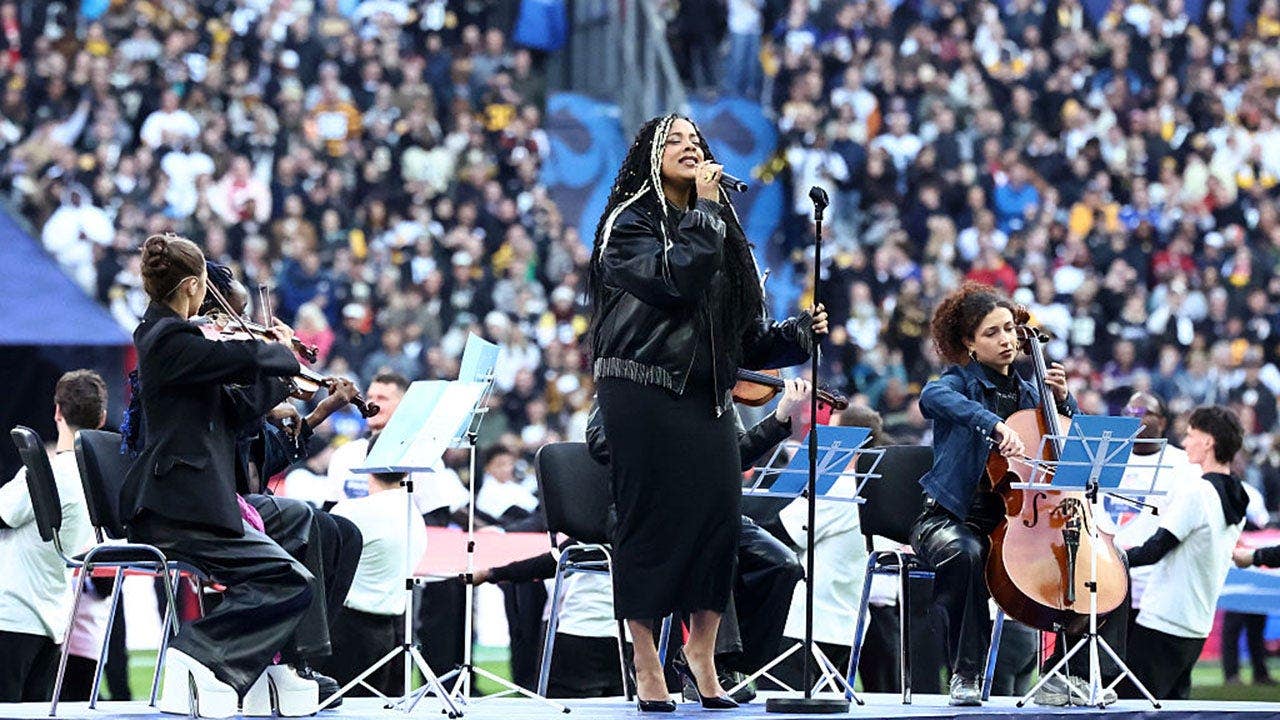
Before the game, singer Nina Tonji performed La Marseillaise at the Stade de France. Although she received a warm round of applause afterward, there has been significant online backlash because she modified the lyrics of the song.

NFL OVERCOMES CIVIL UNREST, TRUMP CONCERNS AND CALLS TO POSTPONE AS STEELERS AND SAINTS KICK OFF IN PARIS

Tonji changed "Qu'un sang impur abreuve nos sillons!" to "Qu'un sang uni abreuve nos sillons!," and that was clearly done on purpose because it has political and societal ramifications.

"Qu’un sang impur abreuve nos sillons" means "May impure blood water our furrows/fields." In the revolutionary context of La Marseillaise, "impure blood" referred to enemies and traitors – particularly French immigrants fighting alongside foreign armies.

Replacing impur ("impure") with uni ("united") changes the meaning of the passage from from a call for enemy blood to nourish France’s soil into an appeal for national unity and solidarity that includes immigrants to nourish France's soil.

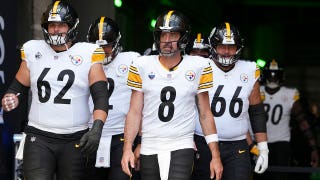
Pittsburgh Steelers players run onto the field before an NFL game against the New Orleans Saints in Saint-Denis, outside Paris, on Sunday, Oct. 25, 2026. (AP Photo/Aurelien Morissard)

Tonji thus changed the song's tone from violent exclusion of a foreign enemy to a message of unity with foreigners.

She gave immigrants cover that La Marseillaise did not in 1792 when it was written during the French Revolution.

And, yes, this rendition represented a lyrical alteration by the Tonji that departed from the traditional wording of the French national anthem. But it comes at a time when people in France are on edge about immigration and foreigners.

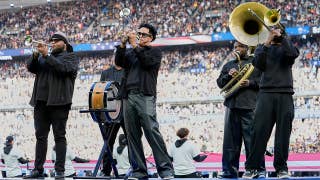
The Soul Rebels perform the US national anthem before an NFL football game between Pittsburgh Steelers and New Orleans Saints in Saint-Denis, outside Paris, Sunday, Oct. 25, 2026. (AP Photo/Steve Luciano)

That’s because at least some of the protesters who took to the streets during the past two weeks of civil unrest were immigrants. Some rallied for anti-Israel causes, while others called for the overthrow of the current political system.

So, predictably, there has been an online backlash.

This is where we also inform you that Tonji was born in Montreal, Canada.

Much of the attention she is now getting has come from media accounts with massive followings.

Cerfia posted the song to its 1.3 million followers and highlighted the changes made.

RMC Sport posted it to its 2.7 million followers, saying the change caused "confusion."

Francetvsport also posted the song to its 297,500 followers.

Saints players warn-up before an NFL football game between Pittsburgh Steelers and New Orleans Saints in Saint-Denis, outside Paris, Sunday, Oct. 25, 2026. (AP Photo/Steve Luciano)

The replies to the viral posts did include some people willing to overlook the change. But a vast majority insulted everything from Tonji's voice, to looks, to the action itself, calling it a "scandal," and "disrespectful" and a "controversy."

Seems some French people have pride in their national anthem.

So here is a common sense approach the NFL should adapt to avoid these public relations black eyes – because the league gets a lot of coverage over national anthem performances that go awry.

ZERO BS. JUST DAKICH. TAKE THE DON'T @ ME PODCAST ON THE ROAD. DOWNLOAD NOW!

The league, which supposedly has a right of refusal over these pregame and even halftime acts, can easily force the artists to sign binding contracts that demand they perform the songs as written.

Sure, interpret all you want, the league can tell the artists. That's what makes you an artist.

But don't alter lyrics to suit a personal agenda or feeling. Because that makes you an activist.

FOLLOW ARMANDO SALGUERO ON X: @ARMANDOSALGUERO

Armando Salguero is OutKick's Senior NFL Writer.

Get all the stories you need-to-know from the most powerful name in news delivered first thing every morning to your inbox

Subscribed

You've successfully subscribed to this newsletter!