Press
Who Israel elects matters, and not just for Israelis
Images
1 / 7
2 / 7
3 / 7
4 / 7

5 / 7

6 / 7

7 / 7
A change of government would not end the occupation, but it could rein in the far right and ease tensions across the region.

Senior Consulting Fellow at the MENA Programme, Chatham House.

Save

Share

In Israel’s convoluted political discourse, just days before a general election that many regard as one of the most consequential in the country’s history, the prevailing perception is that the current coalition and the opposition parties are running neck and neck.

This is far from the full picture. Most polls suggest that Prime Minister Benjamin Netanyahu and his far-right and ultra-Orthodox partners will fall short of a parliamentary majority. Most opposition parties, at least until the last polling station closes and the final results become known, have ruled out forming a coalition government with the parties that primarily represent Israel’s Palestinian citizens, commonly referred to as the “Arab parties”. As a result, the opposition could also struggle to secure the support needed to govern.

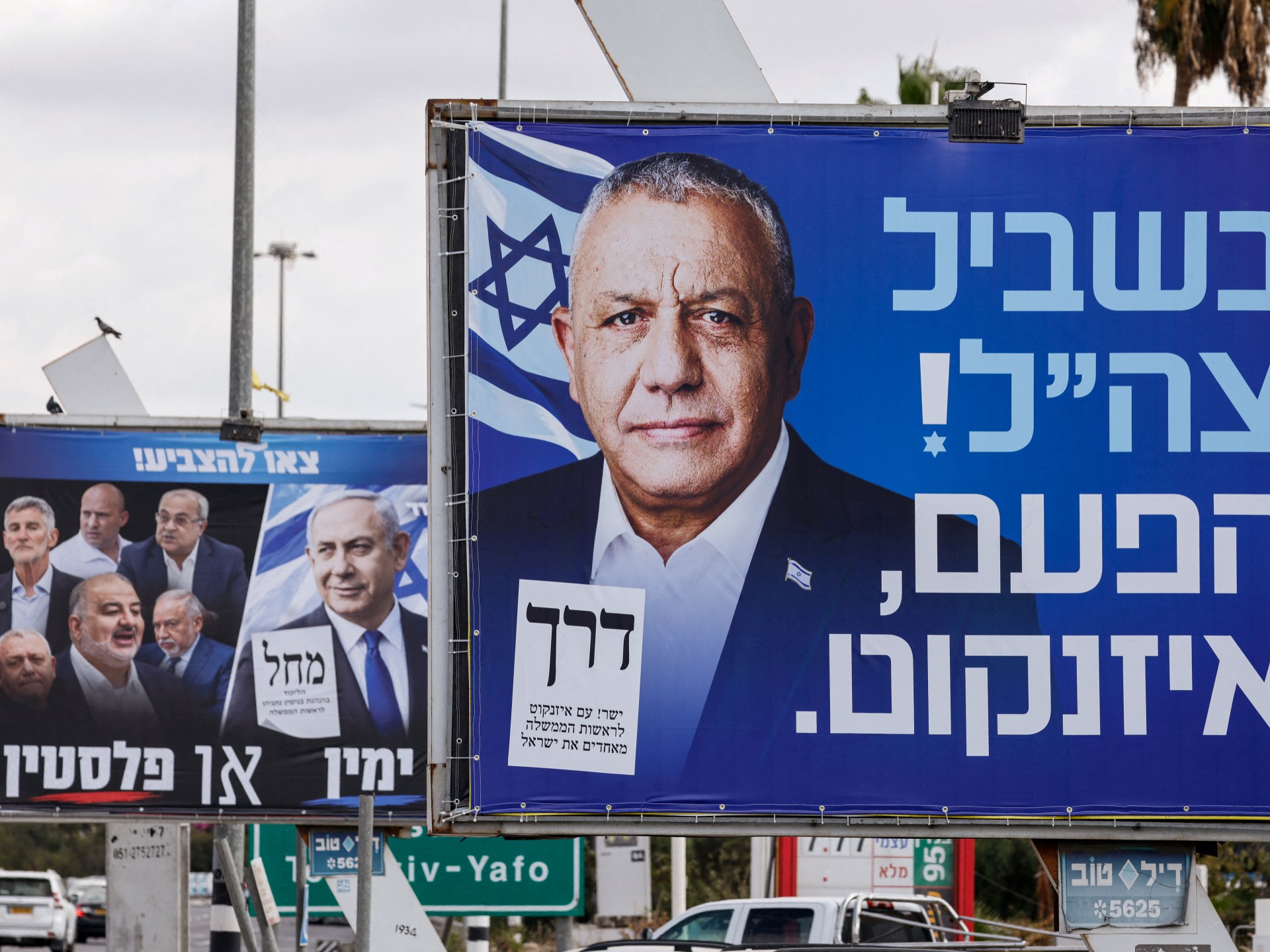
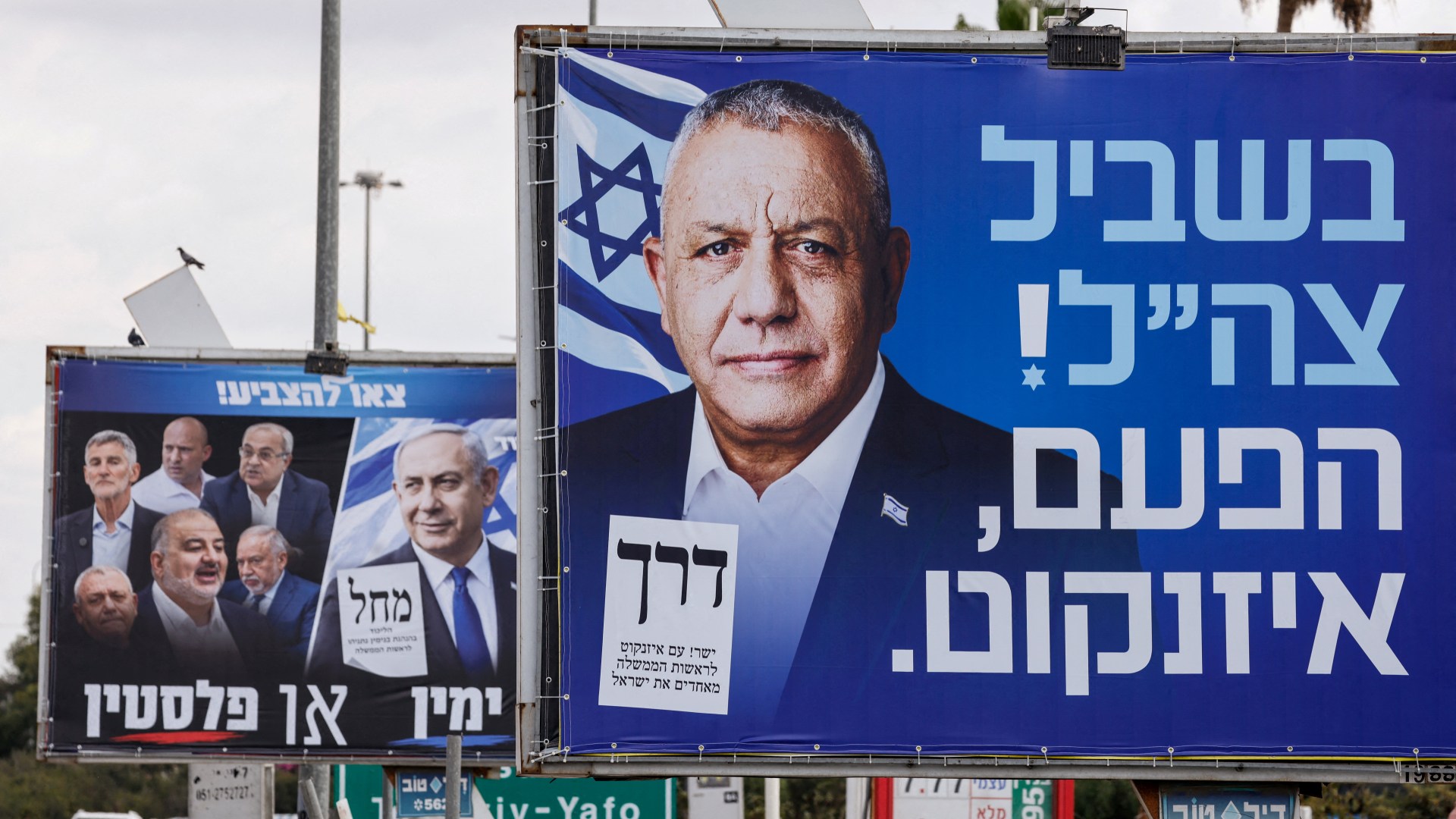
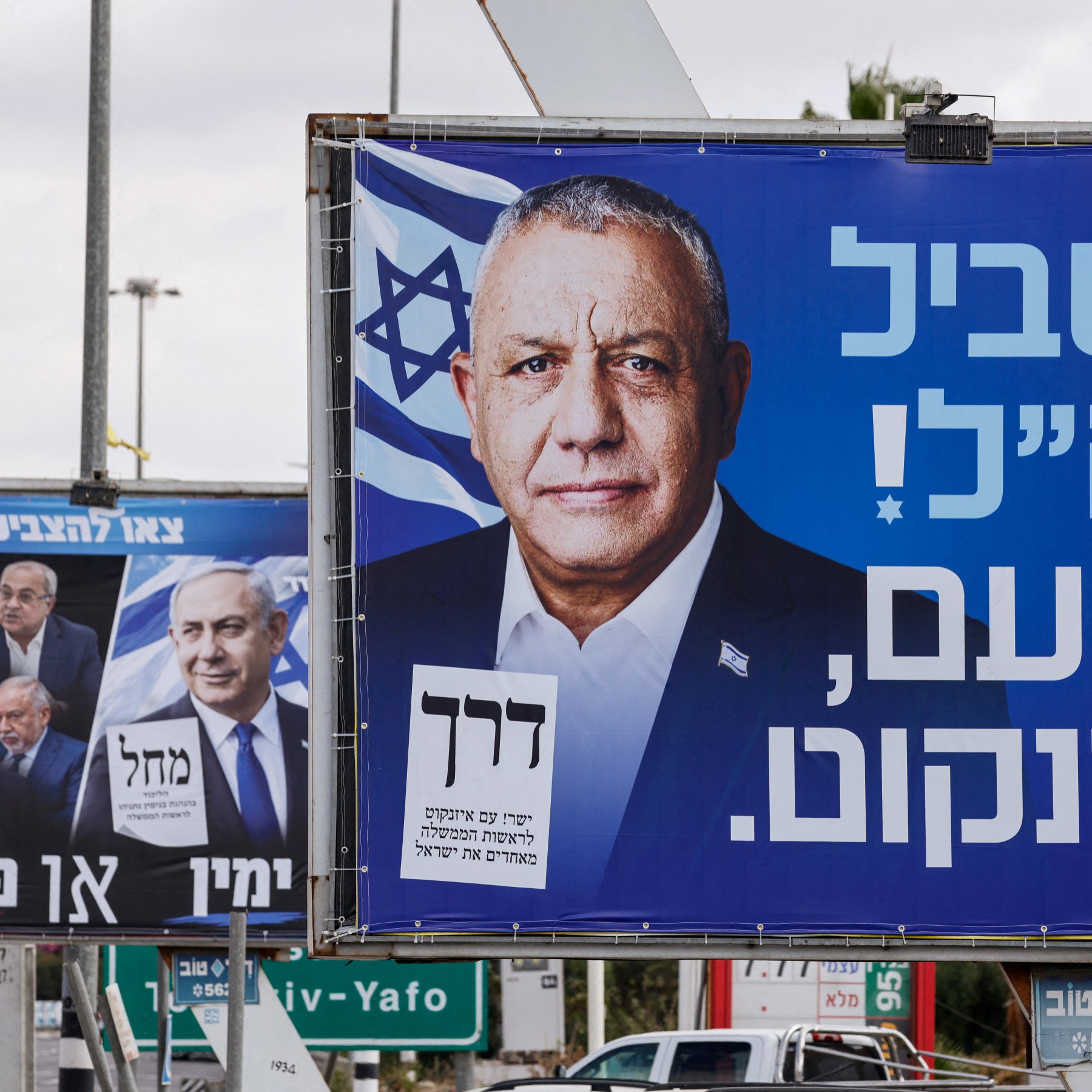
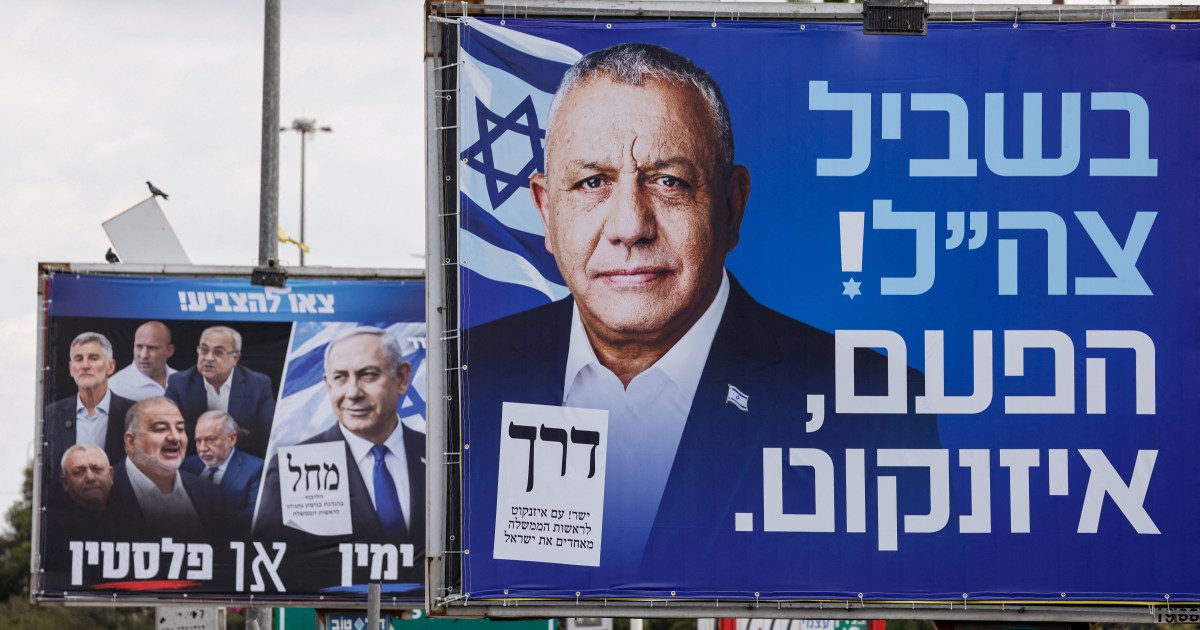
If the opinion polls prove accurate on Tuesday and the opposition can overcome this obstacle to forming a governing majority, a new government could emerge, led by retired Lieutenant General Gadi Eisenkot, a former Israeli military chief of staff from the centre right.

However, the fundamental question is not simply whether the Israeli electorate will decide to change the personnel in government but whether the new leadership will also bring about a change in policy on the most crucial issues facing the country and, by extension, the Palestinians and the wider region. My answer is yes but with significant qualifications.

After a total of nearly two decades in power over the past three decades, including the last four years at the helm of what has arguably been the most far-right and inept government in Israel’s history, Netanyahu may leave behind a deeply scarred country. His determination to retain power has come at the cost of national cohesion, exacerbating fear and a profound siege mentality in Israeli society.

Throughout his time in office, Netanyahu has cynically exploited and manipulated this deeply ingrained sense of insecurity. The horrific Hamas-led October 7 attacks aggravated these fears, pushing Israeli politics further to the right. Most opposition parties are themselves centre-right or right-wing, but they differ considerably from the parties that currently make up the governing coalition.

To begin with, Netanyahu’s decisions on the most fundamental issues facing the country, including national security, have been distorted by the extraordinary circumstances of his standing trial in three corruption cases on charges of fraud, breach of trust and bribery. Consequently, he was prepared first to legitimise and bolster the messianic far right, helping to make its representatives politically acceptable, and then to form a coalition with them.

Other politicians were unwilling to serve under a prime minister facing such charges alongside these extreme national-chauvinistic parties. Eisenkot and Benny Gantz did join an emergency government led by Netanyahu after the October 7 attacks, but left once they realised he was caving in to the far right.

A new prime minister, unencumbered by these personal legal considerations, would have greater freedom to govern without the overriding motive of remaining in power at any cost to avoid accountability in his own corruption cases.

One can argue with a high degree of confidence that a different Israeli government three years ago would have conducted the war in Gaza very differently and agreed to a ceasefire much earlier, facilitating the release of the hostages and sparing many thousands of innocent Palestinian lives. A government without Itamar Ben-Gvir and Bezalel Smotrich would also be more likely to cooperate with United States President Donald Trump’s peace plan and the Board of Peace.

At least in the short term, this could improve humanitarian conditions in the Gaza Strip and pave the way towards some degree of an Israeli withdrawal, even if an immediate and complete withdrawal remains unlikely.

The government that might emerge from the opposition parties, while far from my ideal, could serve as a government of containment – akin to the fictional “little Dutch boy” who plugged a hole in a dike with his finger to prevent a catastrophic flood. Such a government would be unlikely to hesitate to halt and reverse the so-called judicial overhaul, which amounted to an assault on the separation of powers, the system of checks and balances, and, for all intents and purposes, the democratic system itself.

Another Netanyahu-Ben-Gvir government would risk leaving Israel a democracy in name only, with serious consequences not only for its domestic affairs but also for worsening oppression in the occupied Palestinian territory and for its foreign relations.

For instance, a government different from the current one would be unlikely to entertain proposals, heard from the coalition benches, to abolish the Jewish Division of the Shin Bet, Israel’s internal security and counterintelligence service. Without this division, settler terrorist violence would be likely to increase further and continue with near-total impunity.

A new government would also be more likely to base appointments to senior civil service positions on merit rather than political affiliation or personal loyalty to the prime minister, as is often the case under the current government. Moreover, the opposition parties would be expected to honour their promise to take decisive action against terrorist attacks on innocent Palestinians. These attacks have intensified during the olive harvest, making a prompt and sustained response all the more urgent.

Another area in which such a government could make a difference is the approved E1 settlement project, for which construction tenders have already been issued. Whether motivated by ideological considerations, strategic concerns or a desire to ease tensions with the international community, suspending or cancelling the project could be an important first step towards containing settlement expansion in the occupied West Bank.

It is not unrealistic to assume that a new government might adopt an approach that relies less exclusively on military force in Lebanon and Syria and possibly in relation to Iran while remaining open to exploring diplomatic avenues. It would also be less likely to engage in the constant political theatre designed to appease a far-right, ultranationalist base – as the current government has done by passing a law introducing the death penalty for Palestinians convicted of certain terrorist offences and proposing to surround prisons holding Palestinian security prisoners with crocodiles.

You might think that this is an exceptionally low benchmark. Indeed, Eisenkot himself opposes Palestinian statehood and favours continued Israeli security control over Palestinian territory while the opposition’s refusal to work with Arab parties underscores the limits of the change it offers. Yet, under the current circumstances, changing the political discourse and restoring a degree of normality to domestic debate and to Israel’s relations with its regional and international partners could make a real difference. It could, in time, open the way to more rapid and transformative change, provided the international community remains actively and constructively engaged.

At times like these, recognising that politics is the art of the possible and holding a new government accountable for the direction and pace of its promised changes, with a clear sense of urgency, could yield positive results. But first, the electorate must give this possibility a chance at the ballot box.

The views expressed in this article are the author’s own and do not necessarily reflect Al Jazeera’s editorial stance.