huffpost Press
Supreme Court Slaps Down Trump And His Tariffs In Historic Ruling
Images
1 / 8
2 / 8
3 / 8
4 / 8
5 / 8
6 / 8
7 / 8

8 / 8
The Supreme Court struck down most of the “emergency” tariffs that President Donald Trump foisted on the world, in an extraordinary 6-3 decision on Friday that upholds a key separation of powers.

The ruling held that the International Emergency Economic Powers Act, or IEEPA, did not authorize the president to impose tariffs and remanded the case with instructions to dismiss for lack of jurisdiction.

“Based on two words separated by 16 others in Section 1702(a)(1)(B) of IEEPA — ‘regulate’ and ‘importation’ — the President asserts the independent power to impose tariffs on imports from any country, of any product, at any rate, for any amount of time. Those words cannot bear such weight,” Chief Justice John Roberts wrote in the majority opinion.

The justices took a convoluted path to a majority, with Justices Sonia Sotomayor, Elena Kagan, Neil Gorsuch, Amy Coney Barrett and Ketanji Brown Jackson concurring in part or in all. Justices Clarence Thomas, Brett Kavanaugh and Samuel Alito dissented.

During oral arguments on Nov. 5, justices clearly signaled their skepticism as they grilled Solicitor General John Sauer over Trump’s invocation of the 1977 IEEPA to uniformly impose tariffs on global trading partners without checks by Congress.

At the time, the government argued that the rule gave Trump the right to impose tariffs on the basis of a national emergency, or in order to address major foreign policy concerns. Sauer argued the tariffs were not a tax on Americans — something that only Congress is allowed to impose — but rather, an effort to regulate trade.

“The Government and the principal dissent attempt to avoid the application of the major questions doctrine on several grounds. None is convincing.”

In the opinion, Roberts shut down those arguments: “What common sense suggests, congressional practice confirms. When Congress has delegated its tariff powers, it has done so in explicit terms, and subject to strict limits.”

A central issue for the government’s claims was the major questions doctrine, a legal principle recently formalized by the court, which states that when it comes to issues of “vast ‘economic and political significance,’” regulatory agencies and frameworks claiming authority must have been given clear and unambiguous approval by Congress.

“The Government and the principal dissent attempt to avoid application of the major questions doctrine on several grounds. None is convincing,” Roberts wrote, explicitly naming the questions of emergencies and foreign affairs.

“The central thrust of the Government’s and the principal dissent’s proposed exceptions appears to be that ambiguous delegations in statutes addressing ‘the most major of major questions’ should necessarily be construed broadly. ... But it simply does not follow from the fact that a statute deals with major problems that it should be read to delegate all major powers for which there may be a ‘colorable textual basis.’”

“There is no major questions exception to the major questions doctrine,” he added.

With the high court’s ruling, the Trump administration could face a costly prospect it has tried to stave off since the summer: refunds.

A U.S. appeals court ruled in August that most of Trump’s “reciprocal” tariffs were illegal but opted to pause the start of any refund process until the Supreme Court weighed in.

For the small-business owners who sued the administration, the question of refunds is baked into Friday’s victory. “The interim effects of the Court’s decision could be substantial,” Kavanaugh wrote in his dissent. “The United States may be required to refund billions of dollars to importers who paid the IEEPA tariffs, even though some importers may have already passed on costs to consumers or others. As was acknowledged at oral argument, the refund process is likely to be a ‘mess.’”

The path ahead is complicated: There are other statutes Trump can rely on to impose tariffs, but they come with regulatory oversight by Congress and involve proving discrimination against American trade by foreign partners and more.

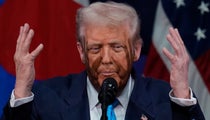
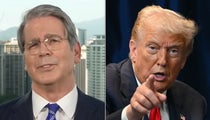
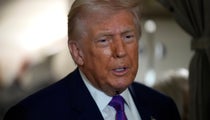
Later on Friday, Trump said explicitly that he intends to find other routes by which to impose tariffs.

“The Supreme Court did not overrule tariffs; they merely overruled a particular use of IEEPA tariffs,” the president said at a press conference.

“Effective immediately, all national security tariffs under Sections 232 and existing Sections 301 tariffs — they’re existing, they’re there — remain in place. ... Today I will sign an order to impose a 10% global tariff under Section 122, over and above our normal tariffs already being charged,” he continued.

He also raged against the six justices who ruled against his tariffs. “Ashamed of certain members of the court, absolutely ashamed,” he said. “They frankly are a disgrace to our nation, those justices.”

He called the court “fools and lapdogs” and suggested justices had succumbed to political pressure. “It is my opinion that the Court has been swayed by foreign interests and a political movement that is far smaller than people would ever think,” he said.

Conversely, he praised by name the three justices — Thomas, Alito and Kavanaugh — who dissented in the ruling, congratulating them “for their strength and wisdom and love of our country.”

By entering your email and clicking Sign Up, you're agreeing to let us send you customized marketing messages about us and our advertising partners. You are also agreeing to our Terms of Service and Privacy Policy.