Press
Three people evacuated from hantavirus-hit cruise ship in the Atlantic
Images
1 / 7
2 / 7
3 / 7
4 / 7

5 / 7

6 / 7

7 / 7
Three people have died from the disease so far, but the WHO says the risk to the public is still ‘low’.

Save

Share

Emergency crews have evacuated three people from a cruise ship hit by a deadly hantavirus outbreak, the United Nations’ health agency says, as experts confirm it to be a rare strain that can be transmitted between humans.

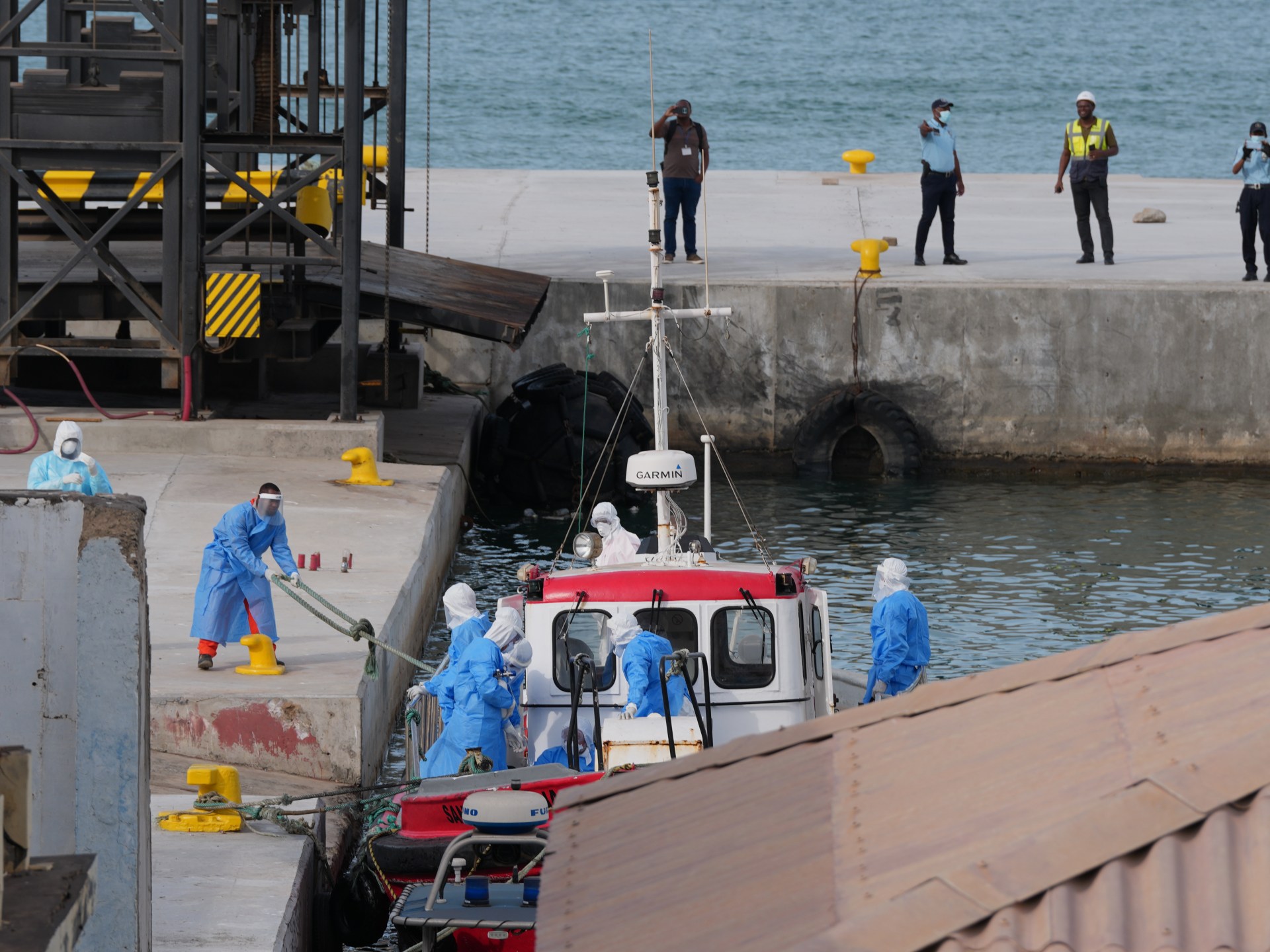
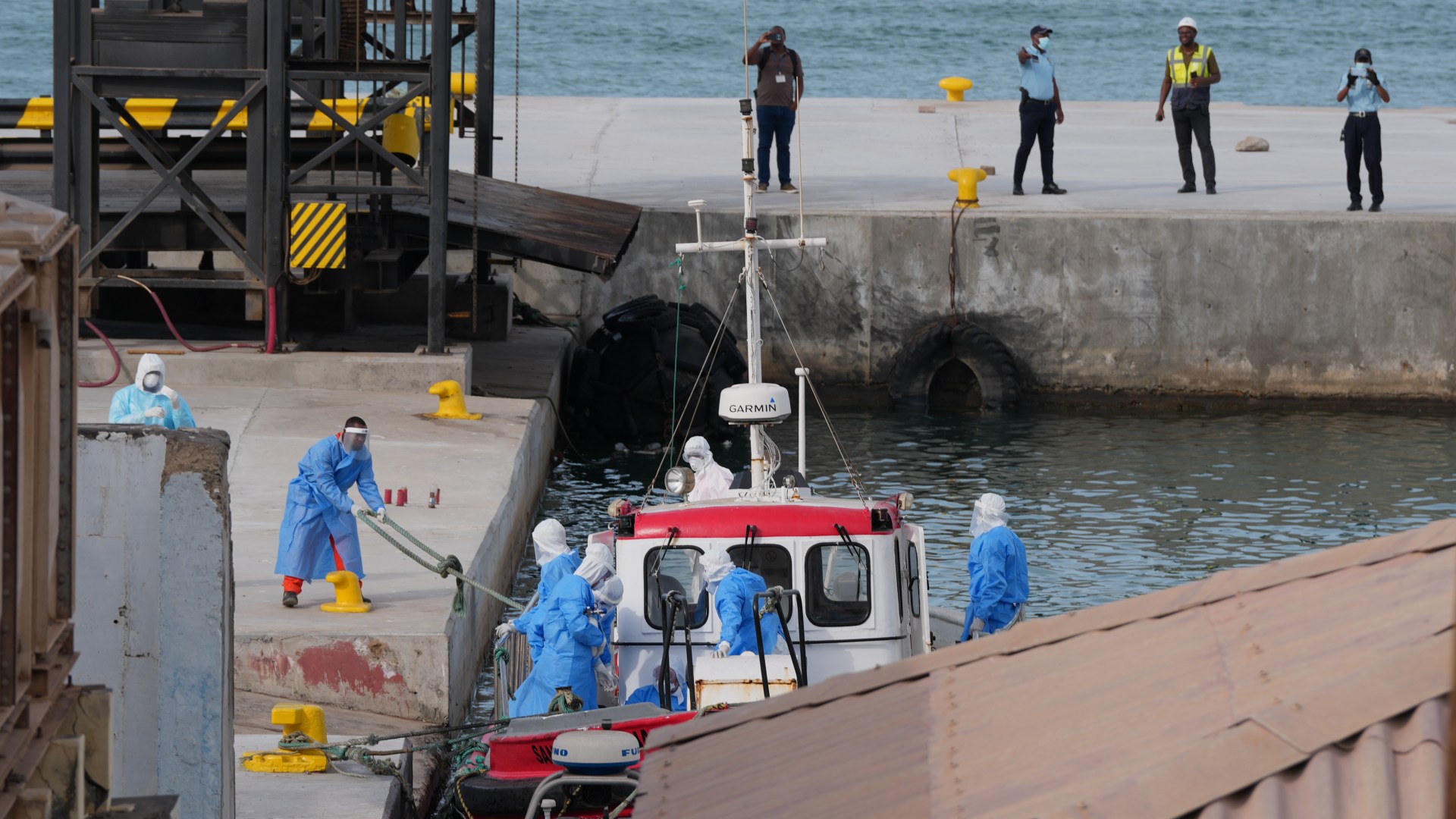
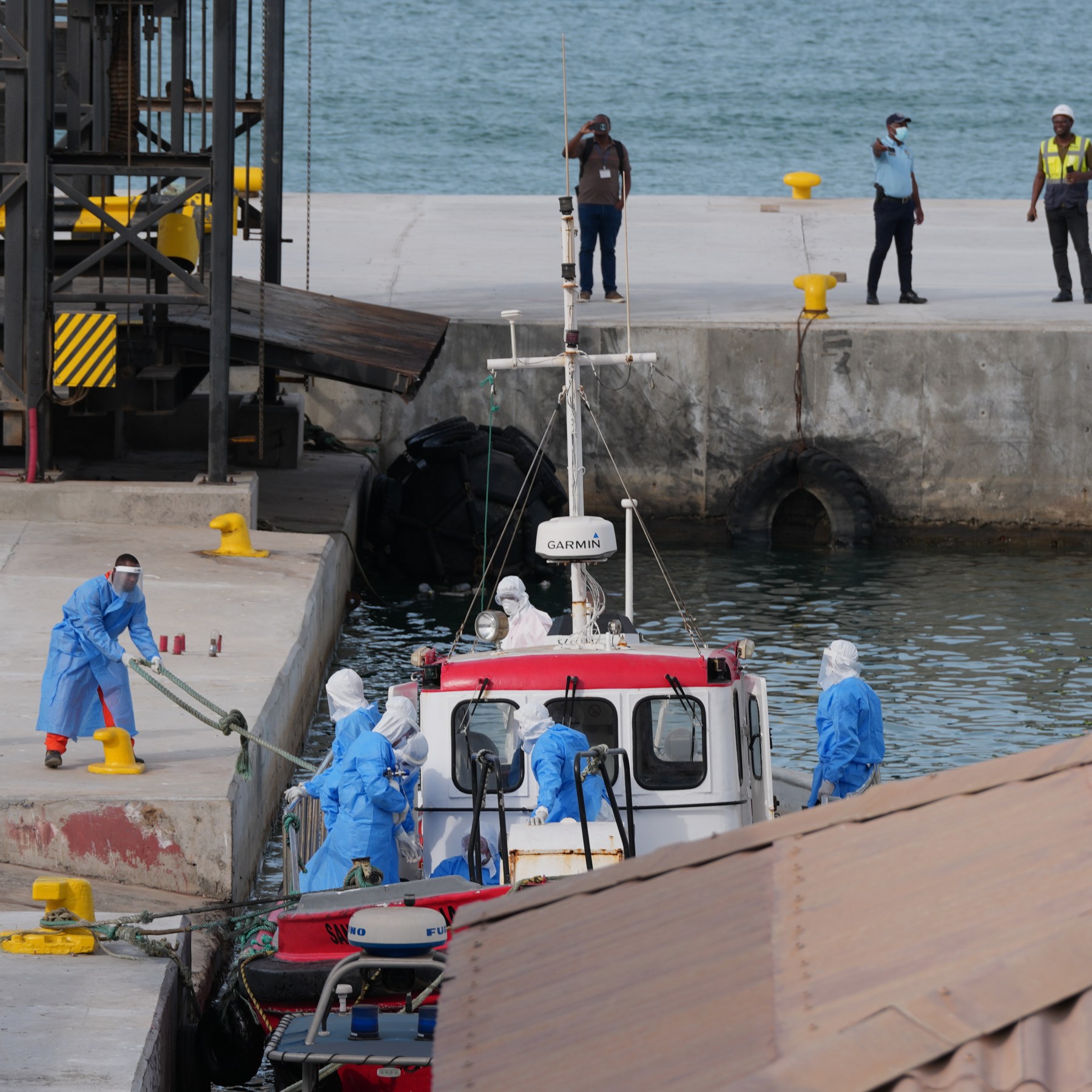
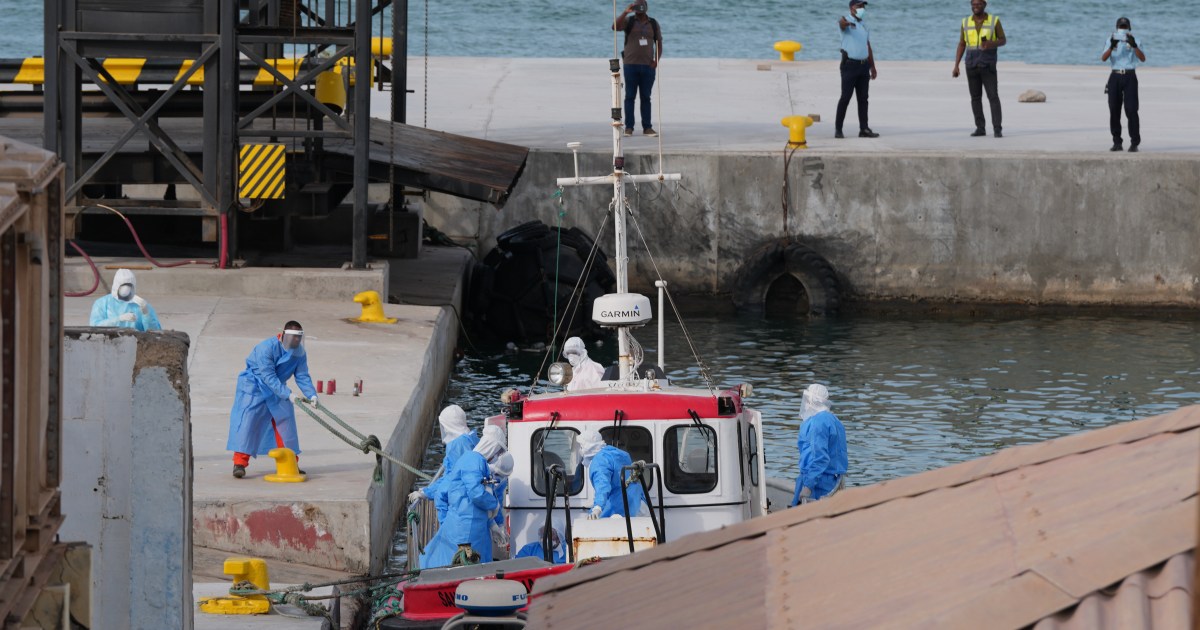
Two sick crew members and one other person who had been in contact with one of the confirmed cases were removed on Wednesday from the MV Hondius off Cape Verde, the World Health Organization (WHO) said on Wednesday.

They later boarded flights at the airport in the country’s capital, Praia. One of the two planes landed in Spain’s Canary Islands on Wednesday, but it was unclear which of the evacuees were onboard.

At least one of the planes was due to go to Amsterdam, but no arrival in the Canary Islands had been confirmed by the authorities.

About 150 people from 23 countries had been reported on board the Hondius.

The luxury cruise ship hit by a deadly hantavirus outbreak and marooned since Sunday off the coast of Cape Verde was set to leave for Spain on Wednesday after the three people were evacuated.

The Canary Islands, an autonomous region of Spain, have refused to allow the luxury cruise ship experiencing the outbreak to dock at any of its ports, despite the Spanish government saying it would be permitted to do so.

Canary Islands President Fernando Clavijo said regional authorities could not allow the MV Hondius – currently anchored off the coast of Cape Verde – to enter the archipelago, saying authorities lacked enough information about the outbreak of the potentially deadly disease to guarantee public safety.

However, Spain’s health minister said that the MV Hondius, with nearly 150 people on board, is expected to dock in Spain’s Tenerife, in the Canary Islands, within three days, adding that those still on board were not presenting any symptoms of the disease.

Once in Tenerife, if they are still healthy, all non-Spanish citizens will be repatriated to their countries, Monica Garcia told a press conference in Madrid.

The vessel has been at the centre of an international health scare since Saturday, when the UN’s health agency was informed that three passengers – a Dutch couple and a German national – had died and the suspected cause was hantavirus. The rare disease is usually spread from infected rodents, typically through urine, droppings and saliva.

One of the passengers who died of hantavirus was “briefly” on board a KLM flight from Johannesburg to the Netherlands, but was removed before take-off, the airline said later Wednesday.

Dutch health authorities are contacting those who were aboard this flight “as a precaution,” KLM said in a statement.

French authorities said that a Frenchman was being monitored as a hantavirus “contact case” after he travelled on the same plane as the Dutch woman who died of the disease.

Officials are trying to trace people on the commercial flight that transported her from the island of Saint Helena to Johannesburg, which South African-based carrier Airlink said was carrying 82 passengers and six crew.

“A French national has in particular been identified among the passengers on a flight taken by one of the cases before they were hospitalised,” a spokeswoman for France’s health ministry said.

Meanwhile, in South Africa, one person – a British national – is being treated for the Andes strain of the virus, which, in rare cases, can spread among people, according to the country’s National Institute for Communicable Diseases. Hantavirus is more commonly transmitted through contact with the urine, saliva or faeces of infected rodents.

The director-general of the WHO, Tedros Adhanom Ghebreyesus, said the current risk to the wider public from the disease remained “low”. WHO officials added that hantavirus spreads between humans only after prolonged and very close contact.

The Hondius departed the southern tip of Argentina in late March, with the outbreak of hantavirus reported while the ship was on its way to Cape Verde.

The first affected passenger, a Dutch national, died on April 11, with his body remaining on board the luxury cruise ship until April 24.