Press
What’s behind the secessionist movement in the Canadian province Alberta?
Images
1 / 9
2 / 9
3 / 9
4 / 9

5 / 9

6 / 9

7 / 9

8 / 9

9 / 9
Oil-rich western province could see independence referendum as soon as October, but complicated process remains ahead.

Save

Share

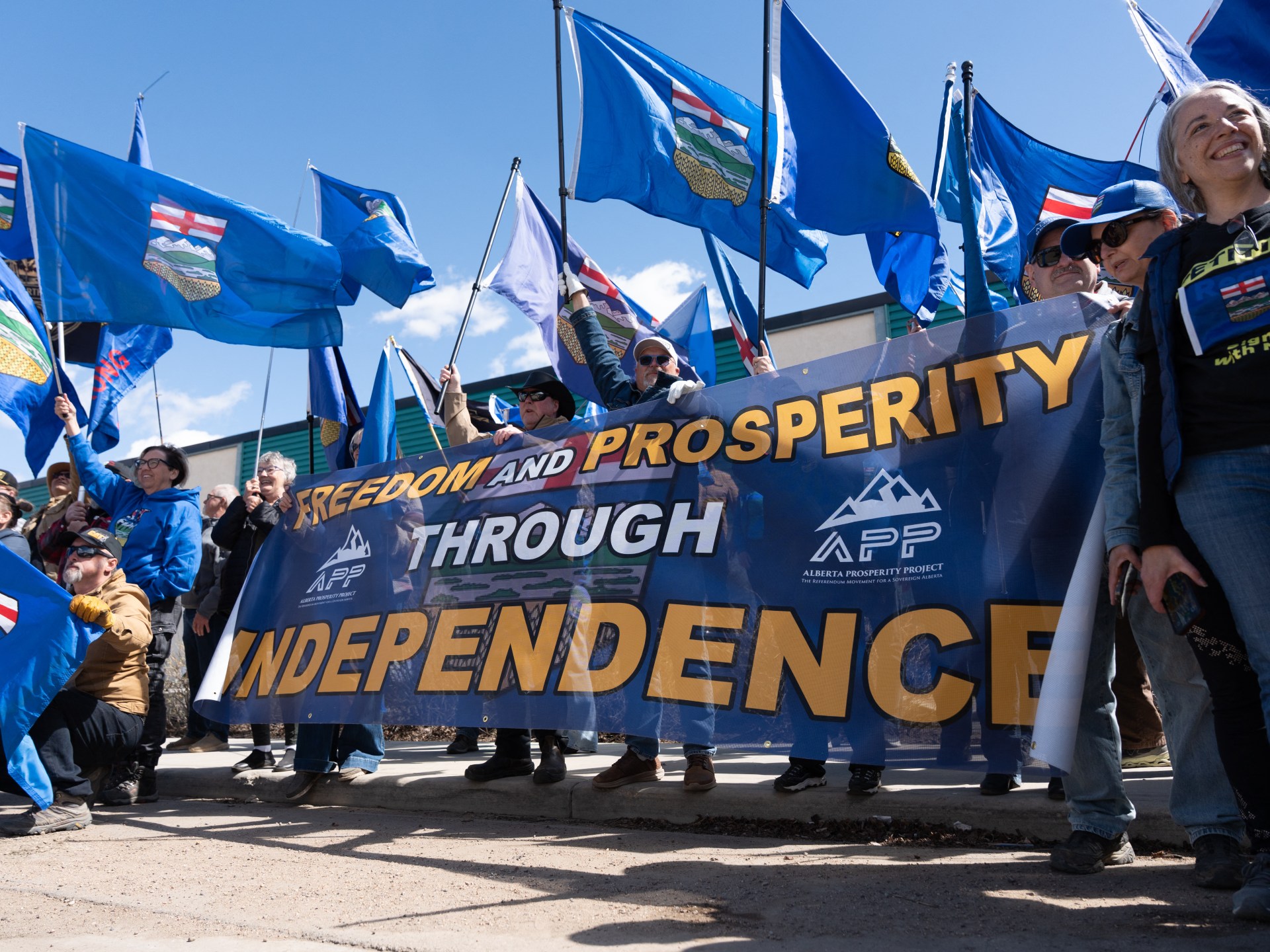
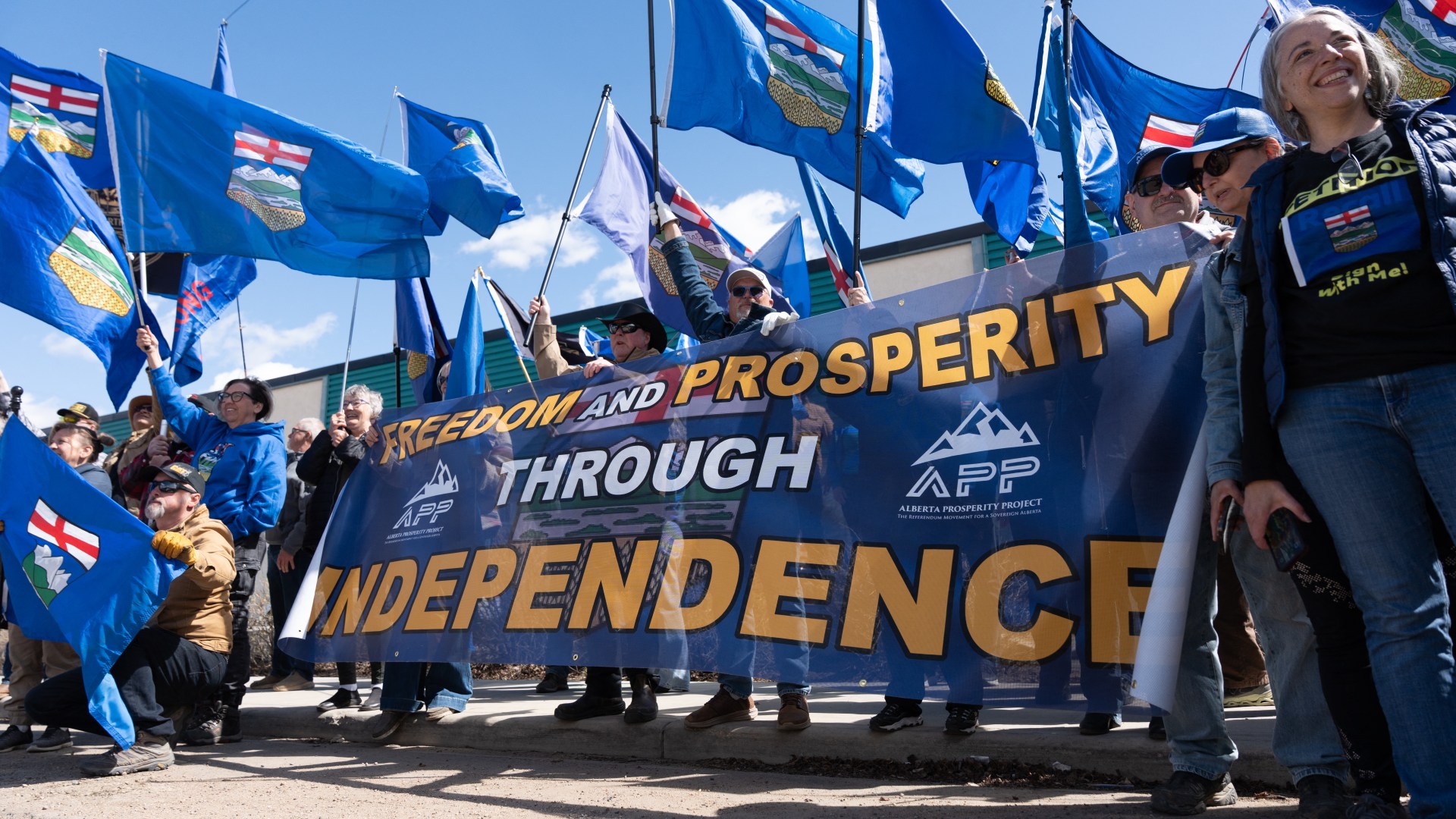
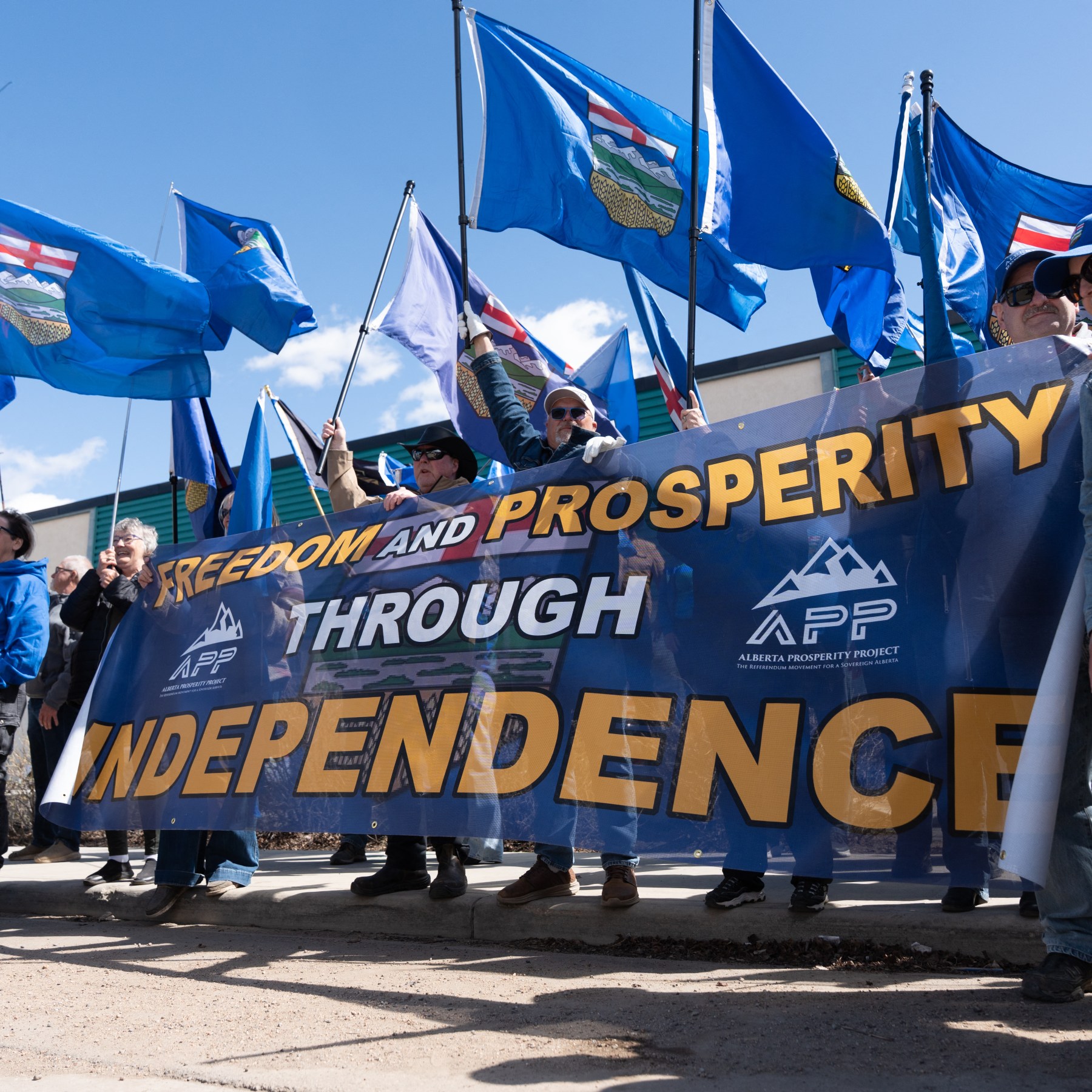
Secessionists in the western Canadian province of Alberta recently announced that they have gathered enough signatures to launch a referendum on independence from the rest of the country.

Leading secessionists said that they formally submitted about 300,000 signatures to election authorities earlier this week, far more than the 178,000 required for the province to consider a referendum.

“This day is historic in Alberta history,” secessionist leader Mitch Sylvestre said.

“It’s the first step to the next step — we’ve gotten by Round 3, and now we’re in the Stanley Cup final,” he added, referring to a hockey championship tournament.

Even if a vote were in favour of independence, an uncertain and protracted process would follow, including possible legal challenges and negotiations with the federal government.

But the possibility of a referendum has brought renewed attention to Alberta’s longstanding frustrations with federal power in Canada and calls for greater autonomy.

What is driving Alberta’s secessionist movement? What are the prospects of success for the referendum, and what could it mean for Canadian politics? Here’s what you need to know.

Alberta secessionists said on Monday that they had submitted nearly 302,000 signatures, more than the 178,000 required to qualify for referendum consideration.

Alberta Premier Danielle Smith has said she would move forward with the vote if the petition gathered enough signatures, although she does not support independence from Canada herself.

If the proposed measure makes it to the ballot, it would ask voters: “Do you agree that the Province of Alberta should cease to be a part of Canada to become an independent state?”

Meeting the signature requirement does not in itself guarantee that a referendum will take place.

Elections Alberta, the province’s electoral authority, still needs to verify the petitioners’ names, a process that has been stalled by a court ruling.

Indigenous groups have also filed a legal challenge, stating that separation would be a violation of their treaty rights.

There are also questions about whether the referendum will gather sufficient support among voters to pass. Polls have shown that about 30 percent of residents would support such a measure.

While secession has never been so close to a vote in Alberta, pro-independence sentiment has been part of the province’s political culture — home to about 5 million people — for decades.

That sentiment is driven largely by the feeling of many in Alberta that the province is distinct — culturally, economically, and politically — from the rest of Canada.

The oil-rich western province has long expressed frustration with political decision-making in Ottawa, the Canadian capital, despite what it sees as its outsized economic contribution to the national economy through its massive fossil fuel industry.

Environmental regulations and efforts to address climate change have become another flashpoint, with secessionist leaders depicting Alberta’s primary industry as hamstrung by regulatory decisions made by bureaucrats with little understanding of the province.

“We’re not like the rest of Canada,” secessionist leader Sylvestre told the news service AFP. “We’re 100 percent conservative. We’re being ruled by Liberals who don’t think like us.”

“They’re trying to shut down our industry,” he added.

Alberta is not the only region with a complicated relationship with the rest of Canada.

The French-speaking province of Quebec is home to a decades-old nationalist movement that has pushed to separate from Canada, rooted in a desire to recognise Quebec’s distinct linguistic and cultural identity.

The popularity of that movement has ebbed, with a March poll finding Quebecois secessionism at its lowest level of support since voters narrowly rejected a referendum in 1995. Still, the secessionist Parti Quebecois political party is polling high in advance of a provincial election set for later this year.

As with all independence movements, the province’s bid for separation from the rest of Canada has become a source of passionate disagreement.

“It stands for something that most of us Albertans and Canadians don’t stand for,” Thomas Lukaszuk, the province’s former deputy premier and a strong supporter of federalist identity, told AFP. “It’s a form of treason.”

Expressions of support from the administration of United States President Donald Trump, who has angered Canadians by suggesting that the country should become a US state, have also sparked criticism that the secessionist movement is undermining Canadian unity.

Asked about the possibility of independence in January, US Treasury Secretary Scott Bessent said that Alberta would be a “natural partner” for the US.

“Alberta has a wealth of natural resources, but they won’t let them build a pipeline to the Pacific,” Bessent told a US right-wing commentator. “I think we should let them come down into the US, and Alberta is a natural partner for the US. They have great resources. The Albertans are very independent people.”

“The separatists are not elected members. They’re just citizens of Canada residing in Alberta, and they actually formed delegations and are received by the highest levels of US administration,” Lukaszuk said. “That must be very empowering to them.”

Regardless of whether the proposed ballot measure succeeds, the development is likely to serve as a shot in the arm for the province’s secessionist forces.

“I think this is going to be a permanent change in our political culture,” independent historian and supporter of independence Michael Wagner told AFP, adding that the movement “is not going to just disappear”.

A provincewide ballot could take place as soon as October, as part of a larger referendum on several questions relating to constitutional issues and other matters, such as immigration, scheduled for October 19.

Justice Shaina Leonard issued a monthlong stay on the certification of the independence petition on April 10, following a legal challenge from several First Nations groups who say separation would violate treaty rights.

That ruling did not bar the gathering of signatures, and a decision on legal challenges from Alberta First Nations is expected later this week. A decision in favour of the First Nations challengers could render the process academic.